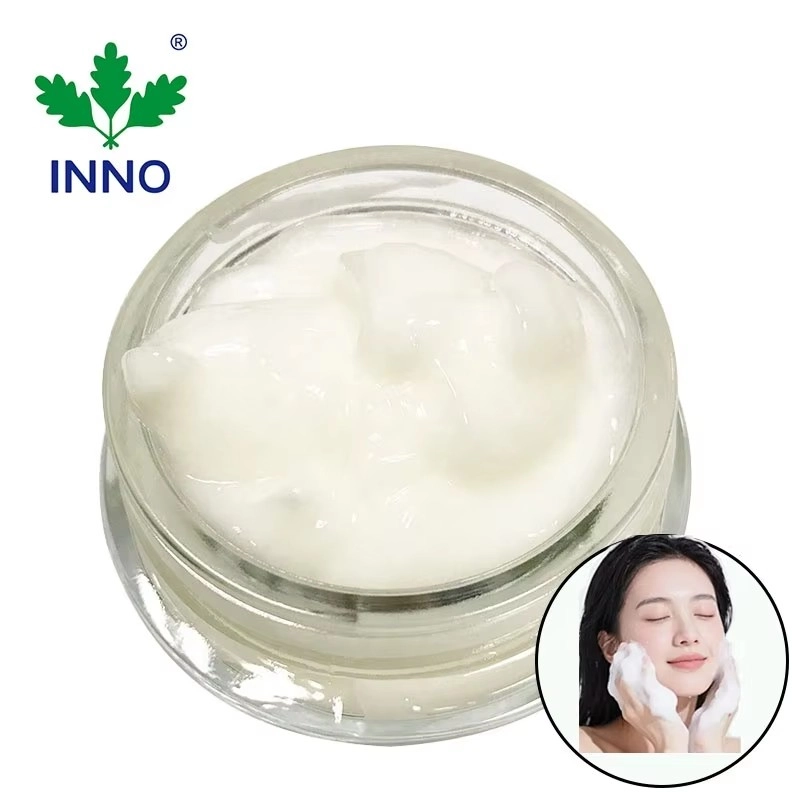
A cream cleanser can look perfect in the jar and disappoint at the sink. The surface is glossy, the peak from the spatula holds, and the sample feels expensive between the fingers. Then water arrives. The cream smears instead of opening, the lather comes slowly, or the rinse leaves more drag than the brief allows.
A Sodium Lauroyl Glutamate facial cleanser can supply cleansing and foam in this format, but the ingredient does not create the entire cream structure by itself. The best development route separates four jobs: the body in the jar, the way the product wets and spreads, the release of surfactant into water, and the feel after rinsing. Once those jobs are visible, you can tell whether the next change belongs in the surfactant blend, the structured base, the pH route, or the finishing ingredients.
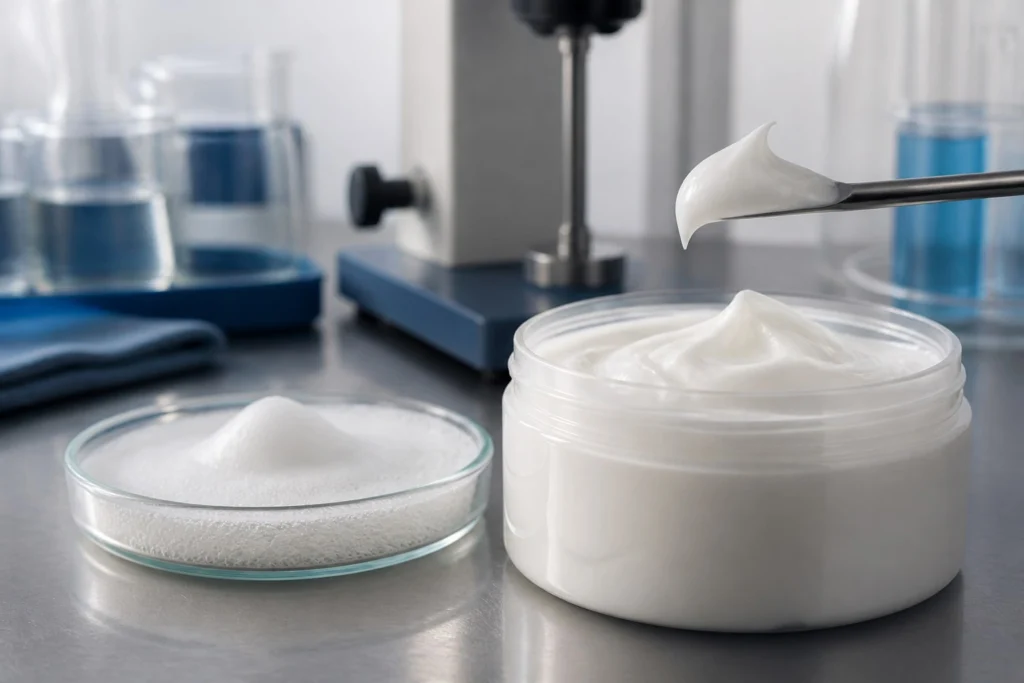
Conceptual illustration.
A cream cleanser has two lives
In the jar, the product needs enough structure to stay where the customer puts it. During use, that structure must relax, mix with water, release the surfactants and rinse away. A formula can perform one life beautifully and mishandle the other.
That is why viscosity alone is a weak finish line. Two samples can give a similar reading and feel completely different when scooped, spread and rinsed. The useful brief follows the product through the whole wash.
| Moment | What the customer notices | What deserves attention in the formula |
| Scoop or dispense | Peak, body, stringiness and dose control | Structure type, yield behavior, air and package opening |
| Spread on wet skin | Slip, drag and how quickly the cream loosens | Water uptake, emollient load and surfactant release |
| Build lather | Speed, volume and creaminess of foam | Delivered surfactant content, blend, pH and oils |
| Rinse and dry down | Residue, tightness, softness and clean finish | Surfactant balance, fatty materials, polymers and rinse water |
This four-moment view also keeps product testing honest. A beautiful jar photograph says nothing about rinse feel. A foam cylinder says little about how the product leaves a tube.
Decide what kind of cream you are building
“Cream cleanser” describes an appearance and a user experience, not one universal internal structure. Before adjusting Sodium Lauroyl Glutamate, identify what is holding your product together.
A structured surfactant paste
Some cream or paste cleansers get much of their body from a concentrated surfactant system and the structures formed inside it. Here, pH, electrolyte, total surfactant content and co-surfactant choice can move texture and foam at the same time. A small change may turn a firm paste into a glossy cream, or into something that is simply hard to pump.
An emulsified cleansing cream
An emulsified cleanser also carries an oil phase and an emulsifying structure. That can improve richness and spread, but the same oils and emulsifiers can change lather and rinse. If the base loses foam only after the oil phase or fragrance enters, the surfactant has not suddenly stopped working. The finished system has changed the job it must do.
A soap-containing cream
Soap-containing pastes bring a different pH and electrolyte environment. They should be treated as their own architecture, especially when Sodium Lauroyl Glutamate is added as a co-surfactant. The formula may still look creamy, but the ionization state, solubility and rinse behavior do not match a lower-pH amino acid surfactant base.
This is the point where a broad recipe becomes less useful than a clear product brief. Once the architecture is named, each trial can answer a real question.
What Sodium Lauroyl Glutamate contributes
Sodium lauroyl glutamate is an anionic amino acid surfactant. In a cream facial cleanser, its main job is to contribute cleansing and lather inside a wider system. The Sodium Lauroyl Glutamate ingredient guide covers the chemistry and grade parameters in more detail.
Its behavior changes with the surrounding formula. The glutamate head group responds to pH, which can shift aggregation, solubility and foam. Published work on pH, temperature and Sodium Lauroyl Glutamate foam behavior makes the broader point clearly: this surfactant responds to its environment. A pH adjustment is therefore part of formulation design, not a final cosmetic correction to the number on the screen.
The practical effects tend to appear together:
- A pH move may change foam while also changing clarity or body.
- Electrolytes can alter the surfactant structures that contribute to viscosity.
- Fragrance, oils and emollients can soften the cream and reduce the speed of lather release.
- Co-surfactants can improve one part of the brief while moving another.
This is also why Sodium Lauroyl Glutamate should not be asked to “make the cream thick.” The complete structure creates the body. For the broader rheology problem, the amino acid surfactant thickening guide explains why salt, polymers and mixed micelles do not behave as interchangeable knobs.
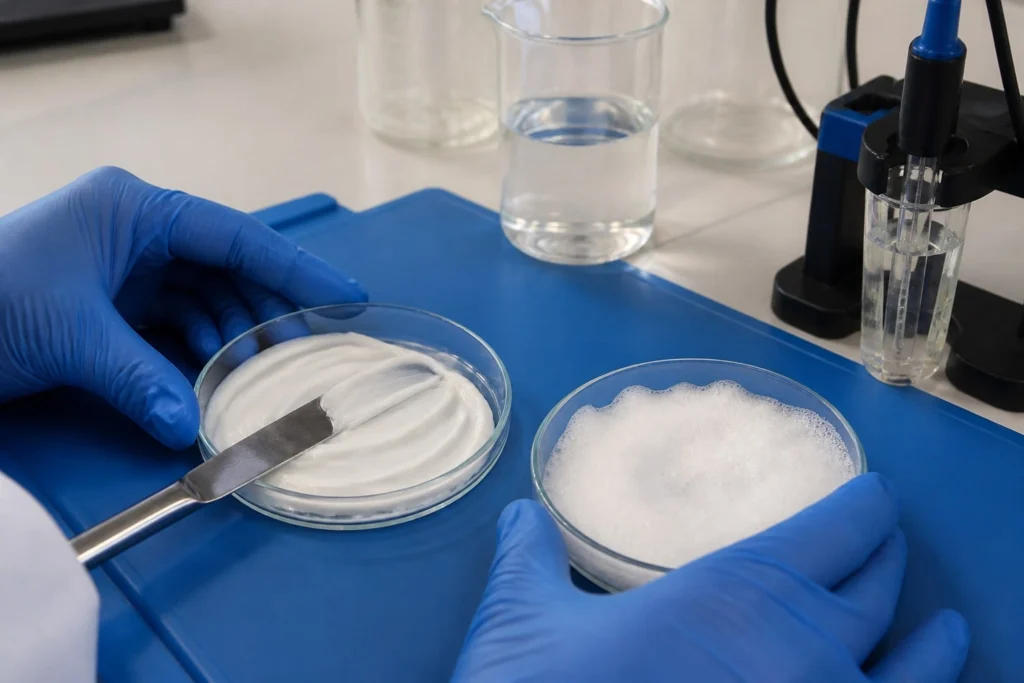
Conceptual illustration of a use-stage comparison, not an INNO laboratory record.
Four small batches can answer four different questions
One elaborate prototype often creates an elaborate argument. A shorter route is to give each small batch one job.
The first batch establishes the surfactant base at the intended delivered content. It tells you whether Sodium Lauroyl Glutamate and the chosen co-surfactants can produce the cleansing and lather character you want before the cream structure complicates the view.
The second batch adds the chosen structure. This is where you watch how the cream opens under water, whether lather slows, and whether the rinse changes. If the foam moves here, the new structure has become part of the surfactant environment.
The third batch brings in fragrance, emollients and the preservation system. These finishing ingredients often expose a base that was only barely holding its texture. A viscosity drop or slower lather is useful information because the commercial product will contain them.
The final batch uses the intended process and package. Cooling, aeration, filling shear and the opening of a tube or jar all influence what the customer receives. Judge the sample after it has cooled and settled under a repeatable site procedure. A warm, aerated batch can flatter both volume and viscosity.
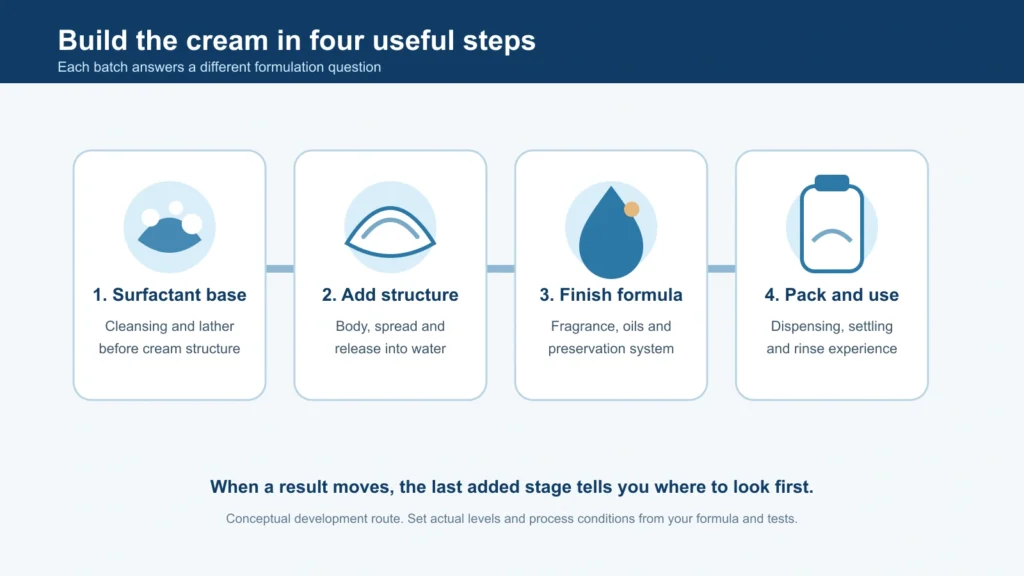
The sequence keeps the discussion practical. When a result moves, you know which part of the formula entered immediately before it.
Read the sample while it moves
The most useful observations happen between the jar and the drain. They help you choose the next experiment without pretending that one symptom has one guaranteed cause.
| What you see | First area worth examining | A focused next comparison |
| Firm peak, poor spread on wet skin | Structure releases too slowly or oil phase is too dominant | Compare the same surfactant base at a lighter structure level |
| Good base foam, slower foam after fragrance | Fragrance load or solubilization route is changing the surfactant environment | Compare the finished base before and after the intended fragrance addition |
| Attractive lather, heavy rinse | Fatty materials, polymer deposition or surfactant balance | Compare rinse on the same soil and water basis, then simplify one contributor |
| Viscosity falls during finishing | Fragrance, electrolyte or pH has moved the structure | Review the addition point and stabilized final pH before adding more thickener |
| Texture changes after filling | Shear, air, cooling history or package interaction | Retain a bulk sample beside the filled pack and compare them on the same date |
The table is a set of starting leads. Your formulation record decides which one survives contact with the actual batch.
Where INNO KWLG-95 fits
INNO KWLG-95 is a white solid powder grade of Sodium Lauroyl Glutamate with a current declared content of 98.5%. Its high supplied content makes it useful when a cream or paste cleanser needs a concentrated solid surfactant option and the process can handle powder dispersion.
The current TDS lists liquid and paste cleansing formats among its application directions. It also gives a specific handling sequence: add the powder to cold water under stirring, disperse it, then heat. That sequence belongs in the process sheet before the cream structure is built around it.
The KWLG-95 product page is the right place to request the current TDS, SDS and sample information. A useful enquiry includes your cream architecture, complete surfactant blend, target pH, finishing ingredients, batch order and package. With that context, we can discuss whether KWLG-95 is a sensible starting grade and which few comparisons deserve the first samples.
Send INNO your cream cleanser brief
Questions
Can a Sodium Lauroyl Glutamate facial cleanser get its cream texture from the surfactant alone?
Sodium Lauroyl Glutamate supplies surfactant function, while the complete formula creates the cream body. The structure may come from a concentrated surfactant phase, an emulsion, fatty materials, polymers or a combination. Identify that route before treating extra surfactant as a thickener.
Should pH be adjusted before or after viscosity?
Set the pH route early enough to see the structure that the finished formula will actually have, then make the final viscosity decision after the complete formula has cooled and settled. pH can change Sodium Lauroyl Glutamate aggregation, so a late correction may move both foam and body.
Why does the cleanser foam in a beaker but poorly from the package?
The package changes dose, shear and how quickly water reaches the cream. Compare the same delivered dose from the intended pack, then observe spread and lather under the intended water routine. A bulk beaker test may hide a product that is too firm to dispense or too slow to open.
What information helps INNO review a cream cleanser trial?
Share the complete surfactant blend, use levels, target and measured pH, batch order, temperature history, fragrance and oil load, viscosity method, package and the exact point where performance changes. That gives the discussion a clear starting place and protects your next sample round from guesswork.