Sulfate-free and mild shampoo briefs ask for cleansing and foam that still feel comfortable on hair and scalp—often with silicone-free conditioning, fragrance load and viscosifier packages that stress the surfactant chassis. Traditional SLES-rich systems are predictable to salt-thicken; amino acid surfactants (taurate, glycinate, glutamate and related grades) are a common building block when the label story is mild or sulfate-free.
INNO’s amino series lets you compare chemistry family and physical form (powder, liquid, paste), then request samples for foam, rinse and compatibility checks in your own formula—not from marketing claims on this page.
Recommended grades
| Grade | Name | Role on shortlist |
|---|
| KWCMT-95 | Sodium Methyl Cocoyl Taurate Powder | Taurate powder grade often considered for mild / sulfate-free shampoo bases |
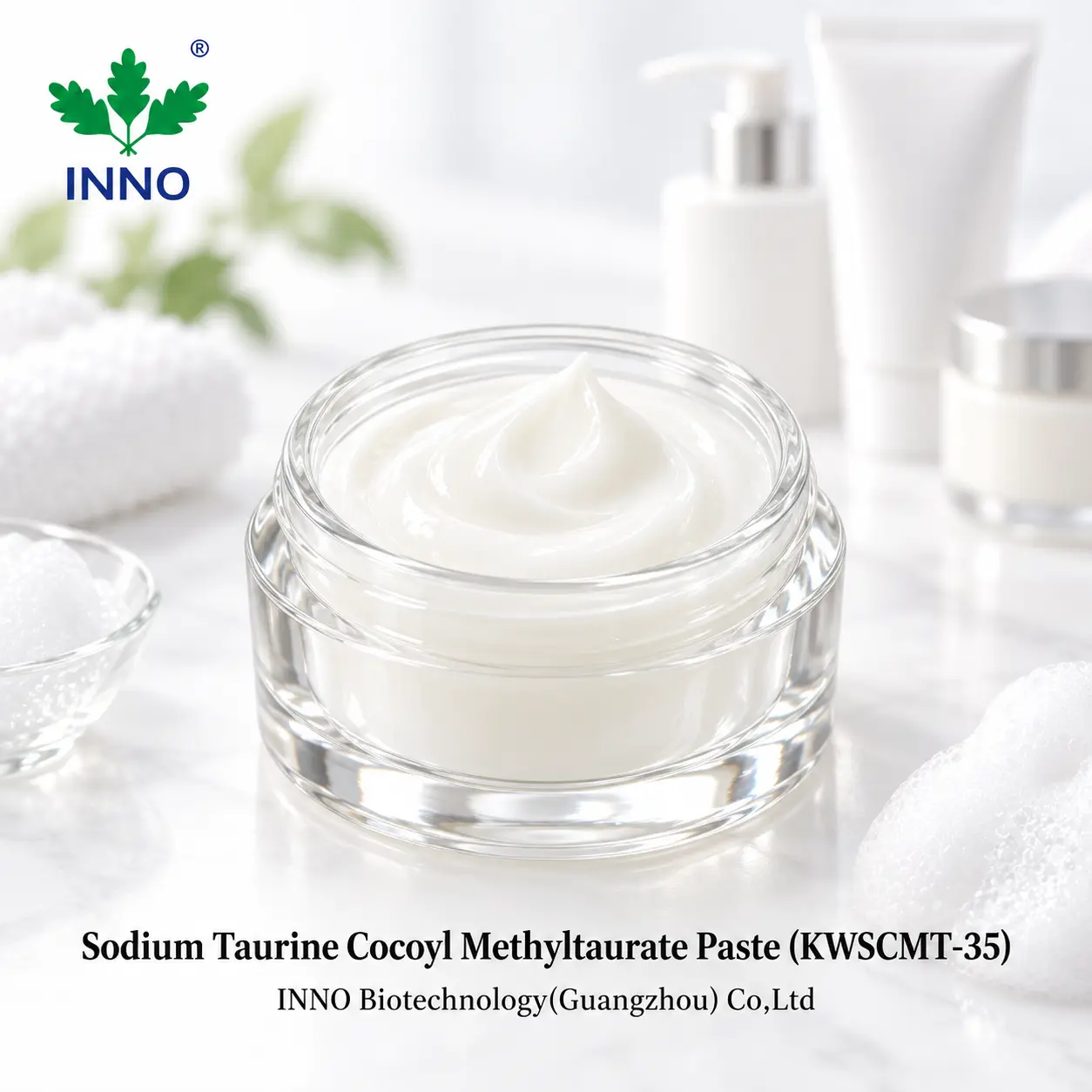
| KWSCMT-35 | Sodium Taurine Cocoyl Methyltaurate Paste | Higher-solids taurinate paste when paste handling fits the process |
| KWGC-95 | Sodium Cocoyl Glycinate Powder | Glycinate powder option for mild cleansing foam character |
| KWCG-95 | Sodium Cocoyl Glutamate Powder | Glutamate powder option when the brief includes glutamate mild-cleansing direction |
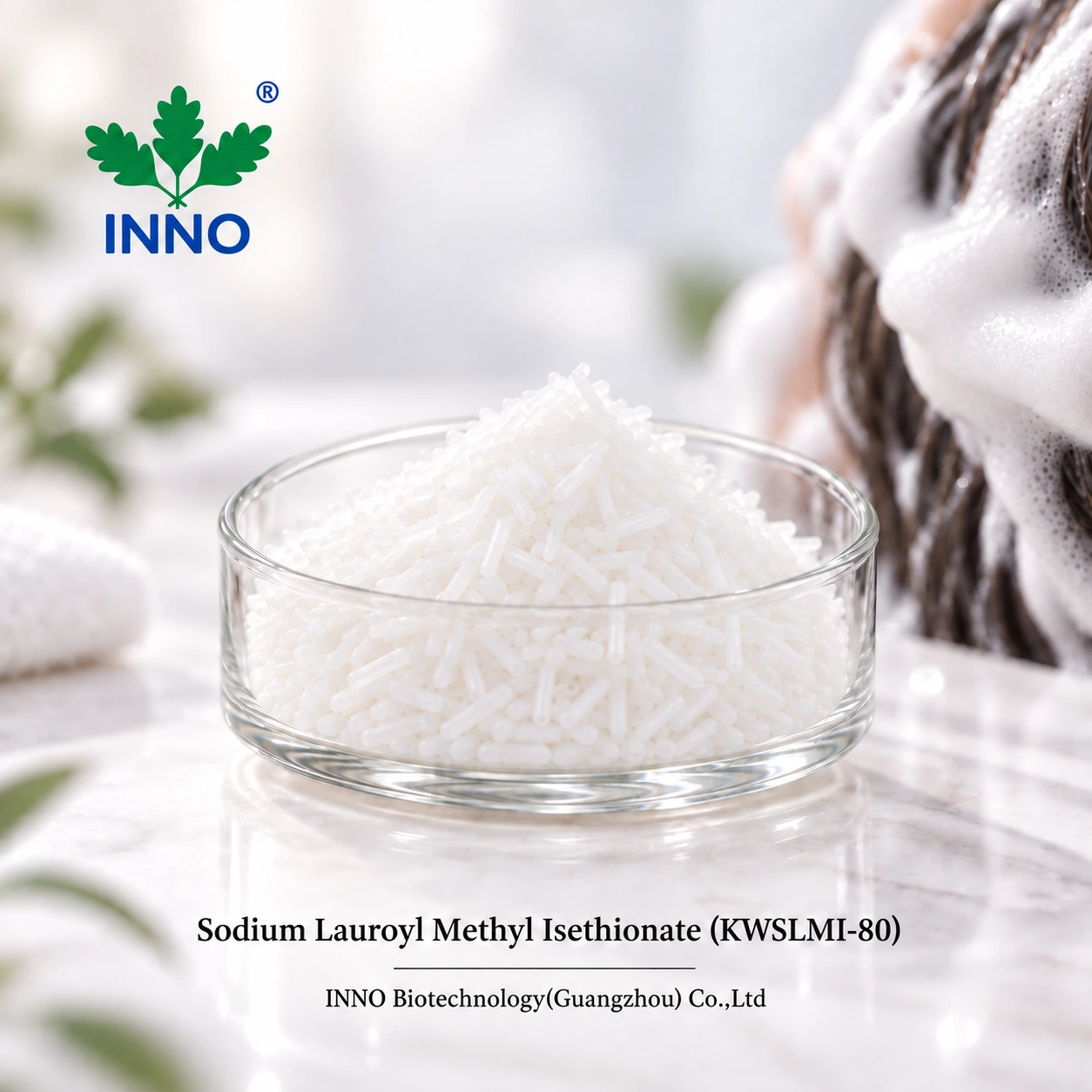
Optional secondary: Sodium Lauroyl Methyl Isethionate (KWSLMI-80) when the chassis uses isethionate as primary or secondary surfactant—confirm on the product page.
Do not invent foam height, salt curves, or “best for oily/dry scalp” claims. Validate in-lab.
Why these grades fit sulfate-free / mild shampoo work
- Label direction: Amino acid surfactants are a standard toolkit when the shampoo story is mild or sulfate-free; pick family (taurate / glycinate / glutamate) from the brief and benchmark INCI.
- Form choice: Powder for high-active contribution; paste for higher solids with paste handling; liquid for easier weighing into some processes.
- System design: Surfactant choice should be checked with cationic polymers, pearlizers, fragrance and preservation—compatibility is formula-specific.
- Series depth: Additional liquid taurate, potassium glycinate and other grades are listed on the amino hub for secondary screening.
Building a sulfate-free or mild shampoo?
Share hair type target, viscosity goal, primary surfactant preference (taurate / glycinate / glutamate) and benchmark. We will help shortlist grades for laboratory screening.
FAQ
Which amino family should I try first for a sulfate-free shampoo?
Start from the brief and benchmark INCI: taurate grades are frequently shortlisted for mild shampoo bases; glycinate or glutamate when those chemistries are specified. There is no single universal “best” grade without your formula data.
Can I mix amino grades with other anionics?
Many commercial systems use blends. Compatibility with polymers, salt and fragrance must be checked in your chassis—request samples and documents for the grades you shortlist.
How do I request a shampoo-grade sample?
Open Request Sample, name the grade codes, and note “shampoo / scalp care” plus format (clear / pearl / cream).