In the complex supply chain of personal care raw materials, procurement managers and R&D engineers frequently find themselves battling information asymmetry. The most glaring symptom of this inefficiency is the amateur, single-line email: “What is your price per kilogram for cosmetic-grade phenoxyethanol?”
This “price-first” sourcing methodology can leave serious formulation and commercial risks unchecked. From incompatible formula matrices and severe odor drift to broken emulsions and outright failures during Preservative Efficacy Testing (PET), the consequences of blind purchasing are expensive.
This guide applies a systems engineering approach to sourcing cosmetic-grade Phenoxyethanol (CAS: 122-99-6). Stripping away marketing fluff, we will deconstruct how to properly audit the three critical technical documents—the Technical Data Sheet (TDS), Safety Data Sheet (SDS), and Certificate of Analysis (COA)—and outline how to structure a precision inquiry that anchors the correct quality standards from day one.
The Physics of Formulation Failure: Why “Just a Preservative” is a Myth
In chemical manufacturing, a shared ingredient name does not guarantee identical commercial specifications or formulation performance. For cosmetic-grade phenoxyethanol, purification control and the agreed specification matter as much as the ingredient name.
1.1 The Butterfly Effect of Impurities
Phenoxyethanol is synthesized via the hydroxyethylation of phenol. If the vacuum distillation process is suboptimal, trace amounts of Free Phenol remain in the raw material.
- Impurity Check: Residual phenol deserves its own specification and test method. The SCCS assessment reports impurity information for the material assessed; it does not establish 10 ppm as a universal odor threshold.
- Engineering Impact: In unscented skin creams, raw-material odor can become a noticeable formulation problem. Check it in the intended base. An unexpected odor or color change calls for investigation; it does not, by itself, identify phenol or metal contamination.
Procurement engineers are not simply buying a microbial inhibitor; they are investing in the supplier’s purification control and batch-to-batch consistency.
Auditing the Holy Trinity: TDS, SDS, and COA
For R&D and sourcing teams, thoroughly understanding technical specifications, safety data, and batch testing responsibilities is a prerequisite for requesting a valid sample.

2.1 TDS (Technical Data Sheet): The Technical Baseline
The TDS is the molecule’s engineering resume. It describes technical properties under stated conditions and gives application guidance. R&D can use it to screen a candidate, but compatibility still needs checking in the intended formula.
What to Audit:
- Solubility & Dual Functionality: Phenoxyethanol is not just a preservative; it also functions as a solvent. For instance, INNO Proextend Phenoxyethanol can help dissolve certain poorly water-soluble ingredients. Check the particular fragrance or active in your formulation.
- Application Dosage Boundaries: Ensure the supplier provides explicit guidelines based on the product matrix. Request the current, grade-specific recommendation for your rinse-off or leave-on application. A supplier’s suggested range is neither a universal cosmetic-grade standard nor a legal concentration limit.
- Broad-Spectrum Capability: Ask which organisms, concentrations and test conditions support any broad-spectrum claim. Raw-material data cannot establish protection in your finished formula.
2.2 SDS (Safety Data Sheet): Compliance & EHS Management
The SDS dictates chemical hazard classifications and handling protocols. Regulatory Affairs relies heavily on it to mitigate legal and compliance risks.
What to Audit:
- Section 3 (Composition): Verify the exact CAS Number (122-99-6). For a blend, check the disclosure rules applicable to the destination market. For example, U.S. OSHA SDS requirements address qualifying hazardous ingredients and allow specified ranges or trade-secret provisions; an SDS is not necessarily the complete formula.
- Regulatory Limitations: Check cosmetic-use restrictions separately from the SDS. EU Cosmetics Regulation 1223/2009, Annex V, entry 29 permits phenoxyethanol as a preservative up to 1.0% in the ready-for-use product. An SDS is not a cosmetic-use approval.
2.3 COA (Certificate of Analysis): The Batch Reality Check
If the TDS describes the product, the COA reports the batch. It is the batch-specific testing report accompanying your physical shipment.
What to Audit: The Engineer’s Guide
Check the grade, lot number, specification limits, methods and reported results. Request numerical values for quantitative tests where they matter to qualification; a qualitative appearance test may legitimately report conformance. For comparing suppliers rather than auditing one document set, use the phenoxyethanol grade comparison guide.
The “Golden Inquiry” Framework: Structuring a Professional RFQ
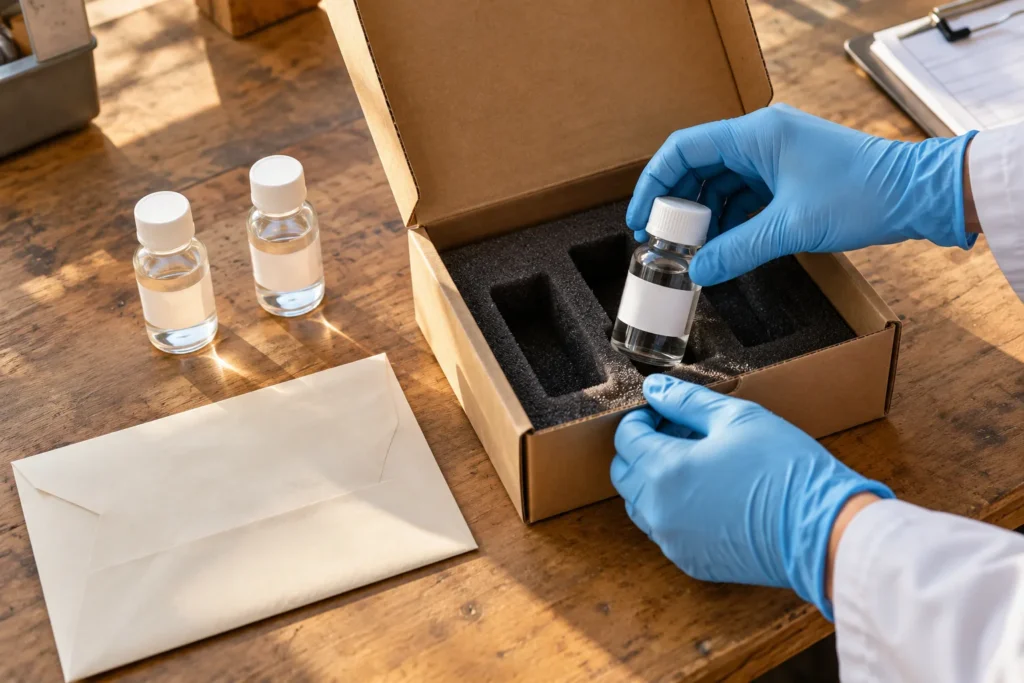
As outlined previously, a high-performance inquiry must provide the supplier with the target market, product type, formulation conditions, and exact document requirements. Without this data, the supplier is forced to guess, leading to weeks of wasted R&D testing.
3.1 Declare Destination-Market Rules
Preservative compliance is highly regional. The final formula must meet destination-market rules.
- Actionable Prompt: “This formulation is intended for the EU market. Please confirm REACH compliance and provide allergen declarations.”
3.2 Define the Product Type (Rinse-off vs. Leave-on)
Leave-on products have extended dermal contact time, so define the relevant safety and sensory requirements for the application. Rinse-off systems (shampoos) face dilution during use, but still need adequate protection in the package. Neither category alone establishes a universal phenol specification.
- Actionable Prompt: “We are formulating a leave-on facial emulsion. Our proposed phenoxyethanol level for the trial is 0.6%; please confirm the current application guidance. Please provide a sample of your low-odor specification.”
3.3 Specify the Formulation Environment
Because surrounding ingredients affect the system, variables like oil phases, emulsifiers, and solubilizers can influence preservative availability. A change in the cosmetic base deserves a fresh evaluation, even if the preservative level remains untouched. A study of preservative compatibility in surfactant-rich emulsions found that performance depended on the excipients and preservative system. For a cream or lotion, the emulsion preservation guide covers those formulation variables.
- Actionable Prompt: “Our matrix utilizes a high ethoxylated surfactant load at pH 5.5. What compatibility data or test plan would help assess phenoxyethanol availability in this system?”
3.4 Establish Testing Accountability
A professional supplier will remind you that while they provide technical guidance, finished-product antimicrobial protection needs its own assessment. ISO 11930 covers preservation efficacy testing and microbiological risk assessment; products assessed as low microbiological risk have a different testing scope.
Sourcing Risk Scenarios: What the Documents Cannot Prove
When procurement bypasses rigorous document audits to save marginal unit costs, physics imposes a heavy tax.
4.1 Illustrative Scenario: Accelerated Discoloration
- Scenario: A formula changes color during accelerated storage. That observation alone cannot identify the affected ingredient or establish metal-catalyzed oxidation. Compare the changed input with a retained sample before assigning a cause.
- Outcome: The emulsion no longer meets its agreed appearance requirement. The cause remains to be established.
- Prevention: Agree on the relevant impurity limits and analytical methods for the grade. If contamination is suspected, request a targeted investigation rather than imposing an unsupported universal total-metals limit.
4.2 Illustrative Scenario: A Supplier Change Before PET
- Scenario: You change suppliers while keeping the same raw-material addition level. A different assay can change the total phenoxyethanol contribution, but an assay difference alone does not establish a change in solvency or explain a PET failure.
- Outcome: Whether the revised formula passes must be established under the applicable test method and acceptance criteria, not predicted from the supplier’s assay alone.
- Prevention: Qualify the exact grade against the agreed specification and assess the revised formula. Preservation and solvency are distinct functions; a high assay does not replace finished-product evidence.
Conclusion: Engineering the Sourcing Process
In modern cosmetic manufacturing, the procurement manager is the ultimate gatekeeper of formulation integrity. Understanding exactly what documents to review prior to purchasing—and knowing how to interrogate a TDS, SDS, and COA—helps reduce the risks of odor drift, emulsion breakdown, and microbial failure.
By abandoning “price-only” inquiries and proactively supplying formulation data and target market constraints, you force the supply chain to treat you as a technical peer. Partnering with suppliers that provide comprehensive batch documentation and support preservation testing is not just a sourcing strategy; it is a fundamental engineering requirement.
FAQ
Is a phenoxyethanol blend completely interchangeable with pure phenoxyethanol?
No. A supplied blend brings additional ingredients into your formula matrix. Replacing a blend with phenoxyethanol alone changes the chemical composition, meaning a fair comparison requires you to calculate both on the same mass basis and account for the secondary ingredient’s behavior.
If my formula fails challenge testing but my dosage is correct, what went wrong?
Surrounding ingredients and preparation conditions drastically affect the preservation system. Changes to oil phases, emulsifiers, or solubilizers can trap the preservative in the oil phase, rendering it unavailable to kill microbes in the water phase.
Does the packaging choice impact the preservative efficacy?
Yes. Packaging and the intended consumer use method are critical variables in preservation assessment. Changing how a product is opened and dispensed (e.g., an open jar vs. an airless pump) is a reason to re-evaluate the risk level and conduct fresh challenge testing.