It’s a common formulation trap: a 1,2-Hexanediol sample passes the room-temperature odor check flawlessly, only to release a sharp off-odor the moment it hits an 80°C water bath. When this thermal odor drift occurs, subjective “sniff tests” aren’t enough. R&D and purchasing teams need concrete data to evaluate the raw material.
In the customer case discussed below, we bypassed the subjective guesswork by introducing a definitive QC metric: the electrolysis rate of a 1% aqueous solution. By clocking in at an ultra-low 2.52, this measurement provided a hard engineering baseline. The conversation instantly shifted from “Does anyone else notice a faint smell?” to objective purity validation.
Struggling with odor drift during heating? [Request a low-electrolysis 1,2-Hexanediol sample and TDS] for your high-temperature processes.
Why “it smells fine” is not enough for a heated process
Room-temperature odor and odor after heating are different checks
An incoming sample may seem acceptable when the container is first opened, yet develop a noticeable odor during heating or after cooling. For a lightly fragranced or fragrance-free formula, even a small change can complicate raw-material approval.
Temperature changes how volatile components distribute between the liquid and the air above it. A trace component that is difficult to notice at room temperature may become easier to detect after a heat cycle. The sample amount, vessel and cooling procedure can also change the comparison. A different odor observation does not, by itself, identify the impurity responsible.
Give the sensory result a measurable companion
A heating test addresses the processing concern directly. An additional QC reading can help the technical team investigate batch consistency and potential impurity differences. Together, they support a more focused decision about which sample to evaluate in the formula.
The aim is a reproducible comparison. Your nose is a useful detector; it is less useful as a spreadsheet.
Trace impurities: separate the odor question from the purity question
What acidic impurities can tell you
A high assay result describes the main component, while an odor complaint concerns whatever reaches the headspace at a detectable level. Those questions overlap, but they need different evidence. An investigation may need to consider residual volatile components, storage exposure or an interaction with the formulation.

Acidic impurities are one possible line of investigation because ionizable species can contribute to an electrical reading in water. Adipic acid should remain a candidate for analysis unless a test identifies it in the sample. The ILO/WHO chemical safety card describes adipic acid itself as odorless. Its presence would therefore need separate evidence before it could explain an odor at 80°C.
Why formulation performance still matters
An impurity difference may also deserve attention if the formula’s pH or compatibility changes. The appropriate comparison is the same formulation, at the same addition level and through the same heat cycle, with the candidate raw material as the controlled variable.
When qualifying 1,2-Hexanediol for preservation support, retain the finished-formula checks as well. Raw-material odor and an electrical QC result answer specific quality questions; preservation performance still needs evaluation in the complete system.
Heated sensory testing and the 1% solution “electrolysis rate”
What the 80°C water-bath test reveals
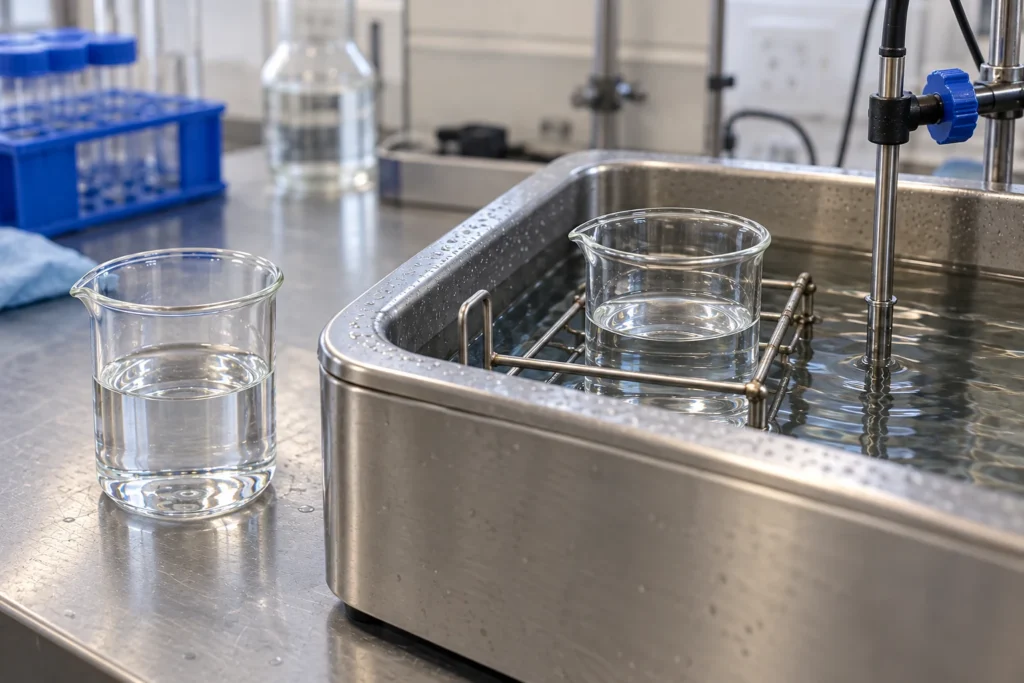
Heating a sample in an 80°C water bath for one hour, then cooling it before comparison, is a practical way to investigate the reported complaint. Its value comes from matching the procedure closely enough for both laboratories to assess the same condition.
Sample quantity, vessel geometry, cover arrangement and cooling endpoint belong in the procedure. Assessors can differ in sensitivity, and repeated exposure can make faint odors harder to distinguish. A retained reference and coded samples can make the observations more consistent. Sensory evaluation should follow the laboratory’s approved handling procedure and the material’s SDS.
How to interpret the additional QC reading
In this case, “1% solution electrolysis rate” is the name used for the additional electrical QC measurement. It provides a recorded result for comparison with other samples tested by the same method. The laboratory’s procedure, reporting unit, dilution basis and measurement temperature determine how that result should be interpreted.
For an electrical method based on solution conductivity, dissolved ions contribute to the signal. Under comparable conditions, a lower reading can be consistent with a lower ionic contribution. Neutral odor-producing compounds may contribute little to that signal, so the result complements the odor test. METTLER TOLEDO’s conductivity reference explains the underlying measurement and its temperature dependence.
| Comparison | Heated sensory test | 1% solution “electrolysis rate” test |
|---|---|---|
| Main question | Does the sample show a noticeable odor after the defined heat cycle? | How does its electrical QC reading compare under the same laboratory method? |
| Recorded output | Odor description and intensity against a reference. | A numerical result with its unit and test conditions. |
| Main variables | Heating time, sample amount, vessel, cooling and assessor. | Dilution basis, water blank, temperature, instrument and procedure. |
| Repeatability | Improves with a defined procedure, coded samples and consistent assessment. | Supports comparison when sample preparation and measurement conditions match. |
| Interpretation limit | Does not identify the chemical source of the odor. | Does not establish odorlessness or total purity on its own. |
| Best use | Evaluate the sensory effect of the process. | Add a traceable QC result to the investigation. |
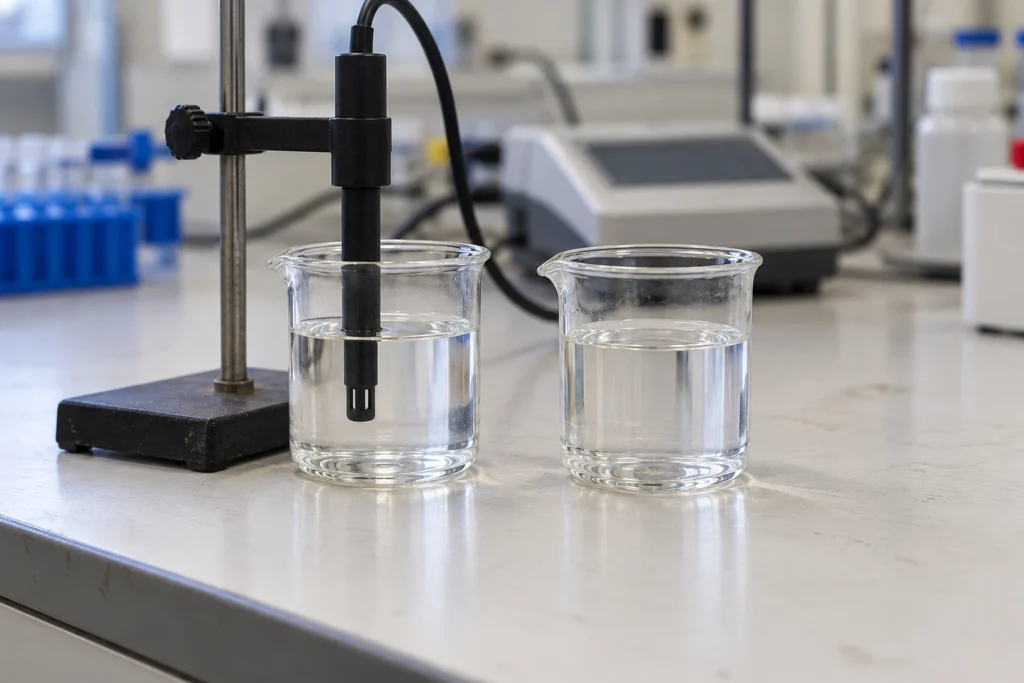
Case review: a faint odor after an 80°C water bath
The customer’s test and feedback
A customer reported a faint similar odor
from the latest batch of 1,2-Hexanediol after heating it in an 80°C water bath for one hour. That observation raised a practical qualification question: would the material meet the customer’s sensory expectations after processing?
A parallel test and a reading of 2.52
Our technical team repeated the heating test. The team’s assessment was that impurity-related odor was negligible under the conditions used. The additional QC test returned an “electrolysis rate” reading of 2.52 for a 1% aqueous solution.
The value added a numerical reference to the discussion. It gave the customer and technical team another result to consider alongside the sensory observations, rather than relying on an odor description alone.
The reported 2.52 is a result from this case. For supplier or batch comparisons, request the reporting unit, preparation method and measurement temperature with the result.

Positive product feedback and plans to resume ordering
The customer later reported that the product was working well and indicated plans to resume ordering. The feedback included:
“oui le produit fonctionne très…”Excerpt from the customer feedback supplied for this case.
The exchange moved forward because the team addressed the customer’s test conditions and added a measurable quality reference. The customer’s application feedback remained part of the decision.
A joint QC checklist for purchasing and R&D
Three fields to discuss before approving a grade
- GC purity: request the assay result, method and reporting basis. Establish whether the specification describes chromatographic area or another assay basis before comparing figures.
- 1% solution “electrolysis rate”: agree on the test procedure, concentration basis, unit, temperature and acceptance limit. Use the same procedure for the reference sample and future batches.
- Water content: request the result and analytical method, and agree on the limit relevant to your purchasing specification.
These fields are requests for qualification data. Confirm which tests are included in the grade specification and which require an additional report. The heated odor comparison should remain part of approval when odor is the reason for the investigation.
What to request in the first inquiry
A price-only inquiry leaves the technical question unanswered. A more useful request includes the formula type, the 1,2-Hexanediol addition level, heating temperature, hold time and the point at which the odor appears.
Please recommend a low-odor 1,2-Hexanediol grade for a process that includes an 80°C water bath for one hour.
We would like a sample, the current TDS and a representative COA. Please also advise whether GC purity, water content and the 1% solution “electrolysis rate” result are available, including the methods, reporting units and test conditions. We will compare the sample against our retained reference after cooling.
Frequently asked questions
Why does 1,2-Hexanediol smell bad when heated?
Heating can make trace volatile components easier to detect in the sample headspace. The source may involve the raw material, storage exposure or a formulation interaction. Compare a heated sample with a retained reference under matched conditions. An electrical QC reading can support the investigation, but identifying the odor source requires separate evidence.
What is a good electrolysis rate for cosmetic-grade 1,2-Hexanediol?
A suitable limit depends on the defined laboratory method and your agreed specification. The case reported here recorded 2.52 for a 1% aqueous solution. Request the unit, dilution basis, temperature and method before comparing that figure with another result. Pair the number with a heating test that reflects your process.
How should I test 1,2-Hexanediol for off-odor in the lab?
Use the reported 80°C water bath for one hour as a comparison condition, with matched sample amounts, vessels and cooling procedures. Assess cooled samples against a retained reference under your laboratory’s approved sensory procedure. Add the 1% solution electrical QC test, documenting its method and conditions, then evaluate the candidate in your formula.
Build odor control into raw-material qualification
Bring the heat cycle and the QC result together
A low-odor grade earns its place in a formula through testing under the conditions that matter to production. The 1% solution “electrolysis rate” can add a recorded quality reference, while the heating comparison shows whether the sample meets the sensory requirement.
Request a sample for your process
For Proextend 1,2-Hexanediol, share your formula type, addition level and heat cycle with INNO. Request a sample and the current technical documents, and ask about the available test record behind the reported 2.52 reading.
Give your next sample trial a clear comparison.
Send the temperature, hold time and odor observation so the technical discussion starts with your actual processing concern.