A practical screening route for formulators working with disodium cocoyl glutamate, co-surfactants, fragrance, preservatives, and rheology modifiers.
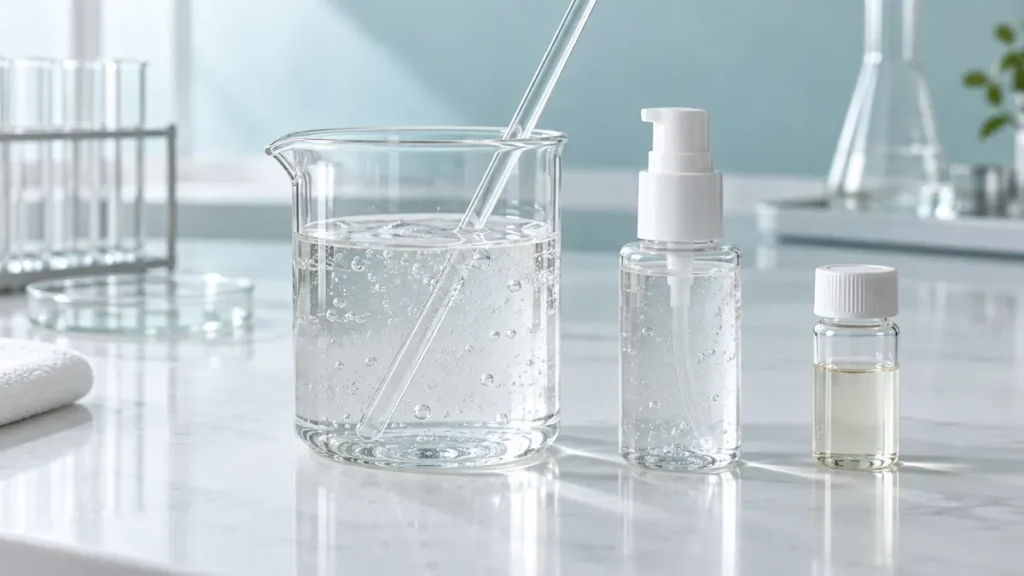
A liquid cocoyl glutamate grade can simplify charging, yet it cannot guarantee a transparent facial cleanser by itself. Co-surfactants, pH adjustment, fragrance, preservatives, electrolytes, and thickeners can each change the finished appearance. If several are added before the first clarity check, a cloudy beaker gives very little diagnostic information.
The faster route is a compatibility ladder. Define what clear means for the project, prepare a simple surfactant base, and add one formulation variable at a time. Measure pH and viscosity under fixed conditions after the sample has settled. This method reveals the first step that changes clarity, so the formulator can adjust one relationship instead of rebuilding the whole formula.
Define the clear-cleanser target before mixing
Visual clarity is not a complete specification. A faint haze may be invisible in a small beaker and obvious in a tall clear bottle. Color can also affect the judgement. Write the acceptance condition before screening: sample depth, container, background, lighting, temperature, and observation time. If the project uses turbidity or transmittance, record the instrument and method as well.
Viscosity needs the same discipline. Record the instrument, spindle or geometry, speed, temperature, sample preparation, and reading time. A number without those conditions cannot be compared reliably between trials. Package behavior should be a separate check because a formula that looks suitable in a beaker may dispense poorly through the intended pump.
Set a target pH range based on the whole product brief and applicable requirements, not on the surfactant name alone. The final value should be measured after all ingredients are present and the batch has reached the chosen measurement temperature. Keep the adjustment solution, addition rate, and equilibration time consistent across samples.
Use a compatibility ladder that isolates each change
Begin with the smallest useful base: water and the primary surfactant system at the intended concentration. Confirm that it is uniform before moving forward. Then split it into matched portions or keep a retained sample at every decision point. The order below makes each failure easier to trace.
| Stage | Single change | What to record | Question answered |
|---|---|---|---|
| Base | Water plus liquid cocoyl glutamate grade | Appearance, pH, mixing time, temperature | Is the starting base uniform? |
| Co-surfactant | Add the selected co-surfactant | Clarity, pH, viscosity after settling | Does the surfactant pair remain compatible? |
| pH | Adjust in controlled increments | Appearance and viscosity at each point | Where does the system change? |
| Preservation | Add the complete preservative system | Immediate and delayed clarity, pH | Does preservation disturb the base? |
| Fragrance | Add the fragrance and chosen solubilization route | Haze, separation, odor, foam | Is the oil load accommodated? |
| Rheology | Add or adjust the thickening system | Viscosity, flow, clarity, dispensing | Does body come without unacceptable haze? |
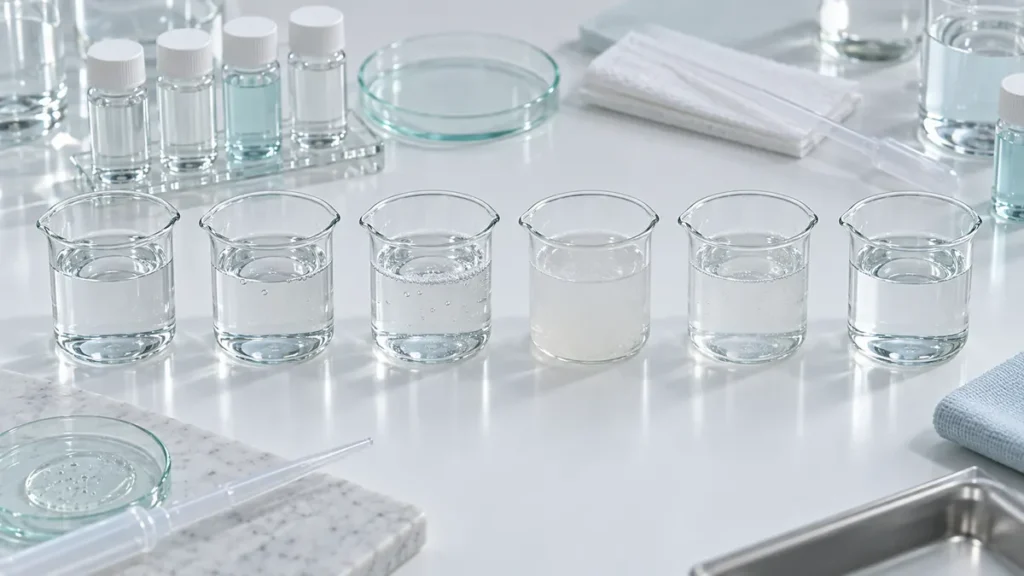
This sequence is a development framework, not a universal manufacturing procedure. A heat-sensitive preservative or a rheology modifier with a specific activation route may require a different production order. Follow the ingredient documents for the actual batch, while preserving the principle of one controlled change and one recorded result.
Why pH and co-surfactants can change clarity and viscosity together
N-acyl glutamate surfactants contain ionizable groups. Changing pH changes the balance of protonated and deprotonated species, which can alter solubility and aggregate structure. A 2022 study of model sodium N-lauryl glutamate and aspartate systems observed pH-dependent changes in protonation and self-assembly. It explains why pH is a structural formulation variable, but it is not a performance test of an INNO cocoyl grade. See the peer-reviewed model-system study.
The co-surfactant can change the same structure. Research on a sodium lauroyl glutamate and lauryl hydroxysulfobetaine model system found that pH and concentration affected micelles and viscoelastic behavior. The practical lesson is to screen the actual cocoyl glutamate blend at the intended ratio rather than copying a viscosity expectation from another surfactant pair. The published rheology study provides mechanism context, not a KWCG-25 formulation claim.
For development work, prepare a small pH series around the project target after the co-surfactant ratio is set. Let each sample reach the same temperature and rest for the same period before comparing it. If one sample becomes hazy or loses body, confirm the result with a fresh batch before changing several ingredients.
Treat fragrance, preservative, and thickener as separate tests
Fragrance is a common late source of haze because it adds a hydrophobic mixture to an aqueous surfactant system. Its behavior depends on the particular fragrance, dose, solubilization route, surfactant ratio, and temperature. Test the commercial fragrance intended for launch. A substitute fragrance may give a false pass.
Preservatives can also affect pH, ionic environment, solubility, and appearance. Passing a visual compatibility check does not prove adequate preservation. ISO 11930 describes the interpretation of preservation efficacy testing and microbiological risk assessment for cosmetic products. Use the finished formula and intended package in the appropriate program; the ISO 11930 scope explains what the reference method covers.
Do not choose a thickener only by the highest beaker viscosity. Compare clarity, low-shear flow, pump recovery, stringiness, foam release, and rinse behavior. Add it after the surfactant and finishing ingredients are understood, unless its supplier procedure requires earlier incorporation. Recheck pH after the structure is complete.
Where INNO KWCG-25 fits in the screening plan
INNO currently offers KWCG-25 as a pale-yellow or colorless transparent liquid. Its current listed composition is 75% Water, 20% Disodium Cocoyl Glutamate, and 5% Sodium Cocoyl Glutamate. The standard listed pack is 200 kg.
Those values matter when building the first trial. KWCG-25 contributes 75 kg of water for every 100 kg charged, so that water must be included in the batch balance. It also supplies two cocoyl glutamate salt forms rather than a single INCI component. Neither the incoming appearance nor the composition proves that the final cleanser will remain clear after pH adjustment and finishing ingredients.
Use the current specification for lot acceptance and request the applicable technical and safety documents before production. Exact use level, process temperature, target pH, viscosity response, fragrance tolerance, and preservative compatibility should be established for the actual formula. INNO can provide a sample for that work, but the finished-product decision should come from the customer’s controlled trial.
Turn the first failure into a useful diagnosis
| First observed change | Next controlled check | Avoid |
|---|---|---|
| Haze appears after co-surfactant addition | Repeat a ratio series at fixed pH and temperature | Adding fragrance or thickener before the cause is known |
| Clarity changes during pH adjustment | Use smaller increments and record appearance after equilibration | Correcting back and forth in one sample |
| Fragrance creates immediate haze | Test fragrance load and solubilization route in matched samples | Assuming extra mixing time will solve incompatibility |
| Viscosity falls after final additions | Compare the retained pre-addition sample and rebuild that single step | Adding more thickener without checking pH and compatibility |
| A clear sample hazes in storage | Check temperature history, pH, package, and the first change time | Calling the room-temperature beaker a stability result |
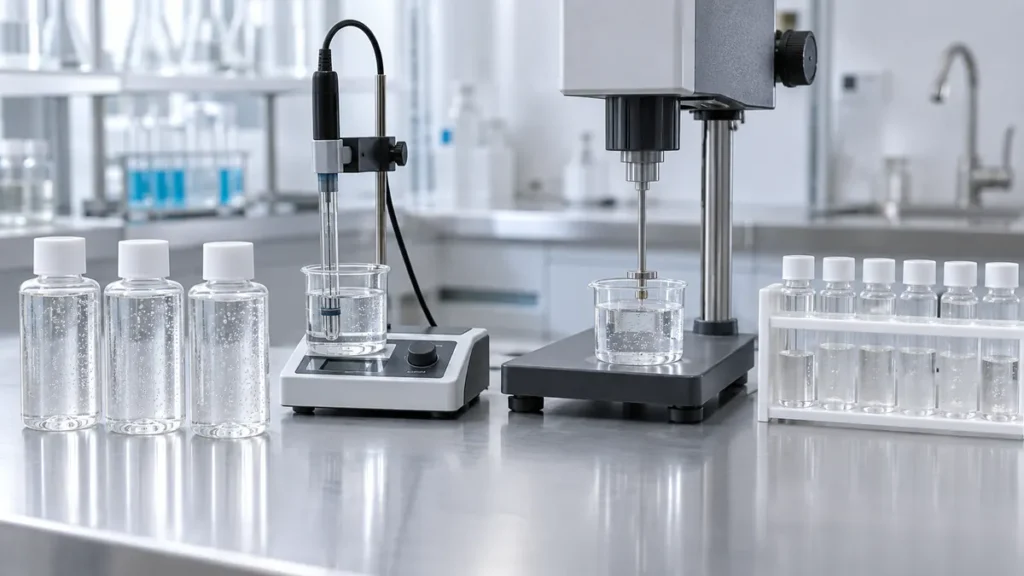
Move the selected formula into a stability program that reflects its likely storage, transport, and use. Cosmetics Europe notes that a cosmetic stability study should consider physical integrity, chemical and microbiological stability, and compatibility between the product and container. Its stability testing guideline also explains why one standard program cannot fit every formula type.
Frequently asked questions
Can KWCG-25 make a crystal-clear facial cleanser?
It can be evaluated for clear cleansers, but clarity must be confirmed after the full surfactant system, pH adjustment, fragrance, preservative, and thickener are present.
The incoming liquid may look transparent while the finished formula does not. Use the staged ladder to identify the first ingredient or condition that changes appearance.
Why did the cleanser turn cloudy after fragrance was added?
The fragrance load may exceed what the current surfactant and solubilization system can hold under the formula’s pH and temperature conditions.
Repeat the step with the launch fragrance in a small dose series. Compare a fragrance-free control and change only one solubilization variable at a time.
Should pH be adjusted before or after thickening?
Follow the thickener supplier’s process, but always verify and finalize pH after the complete formula has equilibrated at the defined measurement temperature.
For early screening, a pH series in the unthickened surfactant base can reveal compatibility changes before rheology complicates the result.
Does a clear and stable-looking beaker prove the preservative works?
No. Visual stability does not demonstrate antimicrobial protection; the finished formula requires an appropriate preservation efficacy and microbiological risk assessment.
Preservative performance can depend on the complete composition, process, and package. Use the applicable current standard and qualified laboratory method.
Discuss your clear-cleanser screening plan with INNO
Send INNO your target pH, clarity acceptance method, current formula skeleton, surfactant ratios, fragrance, preservative, rheology system, process equipment, and intended package. We can prepare a KWCG-25 sample and discuss a practical small-batch comparison for your formulation.