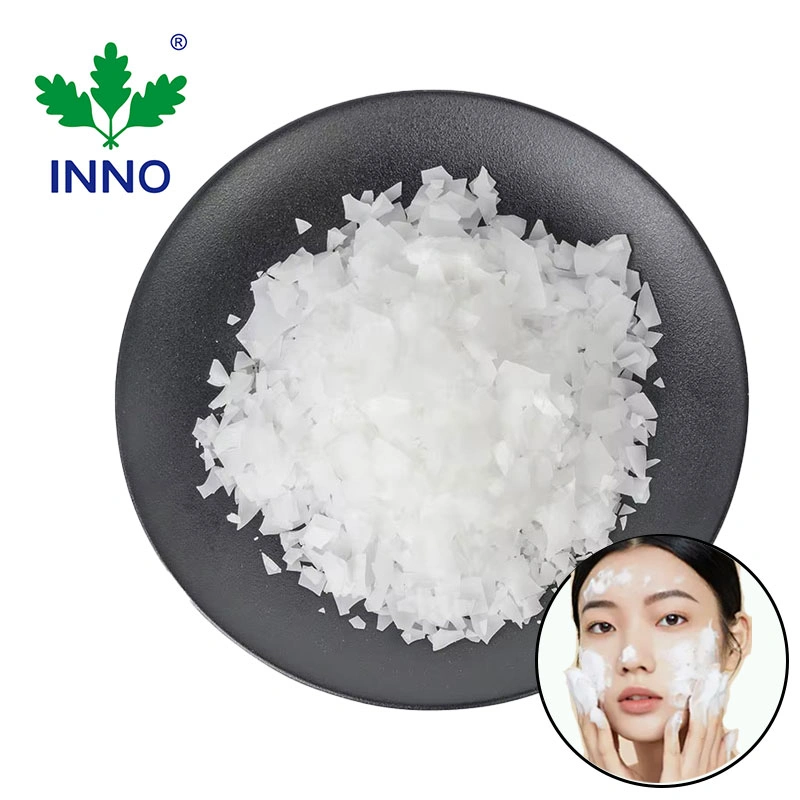
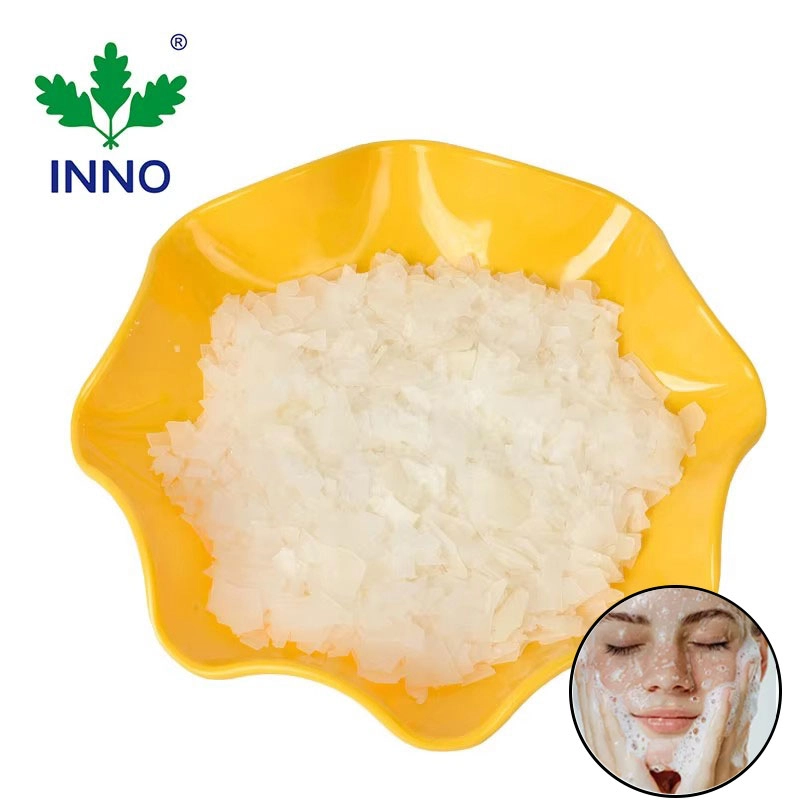
We supply PEG-120 Methyl Glucose Trioleate as INNO KWDOE-120S, a cosmetic-grade nonionic surfactant-system thickener and rheology modifier.
Key Benefits of PEG-120 Methyl Glucose Trioleate (KWDOE-120S)
- KWDOE-120S thickens surfactant systems across a broad pH range from 4.5 to 9.0. It is particularly useful in amino-acid and succinate bases that do not respond well to conventional salt thickening.
- The trioleate structure builds useful viscosity while preserving foam. Formulators can improve body and flow without sacrificing the lather expected from a facial cleanser, shampoo or body wash.
- It works in many transparent cleansing bases. The finished product can remain clear while gaining a more controlled, consumer-friendly rheology.
- Broad compatibility with common surfactant families gives formulators room to tune viscosity, clarity and after-feel. The grade can support several surfactant combinations instead of one narrowly defined base.
- KWDOE-120S has a mild profile and a light skin feel. It is designed to thicken without leaving the heavy, over-gelled texture that can make a cleanser difficult to dispense or rinse.
Recommended applications
- Use KWDOE-120S in clear amino-acid facial cleansers that are difficult to thicken with salt but still need a clean, transparent appearance.
- It is particularly effective in succinate surfactant systems and other bases that require viscosity support across pH 4.5 to 9.0.
- In shampoo, body wash and hand wash, the grade builds body without suppressing foam or leaving an over-gelled texture.
- It also suits mild baby-shampoo concepts where controlled flow, gentle after-feel and surfactant compatibility must be addressed together.
Formulation and commercial details
| Grade | Cosmetic Grade |
|---|---|
| Packaging | 25 kg cardboard drum |
| Gross weight | 27.9 kg |
| Packing dimensions | Ø38xH49.5cm |
| How to use | Melt or dissolve the flakes completely before setting viscosity. Check the final clarity, foam and flow after adding fragrance, electrolyte and the preservation system. |
| Compatibility | Use it in the complete surfactant or emulsion system and set the final viscosity, clarity and stability after all ingredients are present. |
Choosing between related INNO products
KWDOE-120S is the trioleate thickener. KWDOE-120 is the dioleate alternative. Compare both in the actual surfactant base for viscosity, clarity and flow.
Frequently asked questions
How do you confirm that a cleanser has reached the useful limit of salt thickening before screening KWDOE-120S?
Run a complete salt curve and stop when added electrolyte gives little extra viscosity, starts to reduce body, or damages clarity and foam. Use that plateau as the control for the KWDOE-120S trial instead of comparing against an arbitrary salt level.
When should a formulator choose the trioleate grade over PEG-120 Methyl Glucose Dioleate?
Choose KWDOE-120S when broad surfactant compatibility, clear-system thickening and a wide formulation window are the priorities. Use the dioleate grade when a smoother, more conventional rheology adjustment is the better match for the base.
The KWDOE-120S batch built slowly or lost body after fragrance. What should be tested first?
Associative thickening depends on the final micelle structure. Give the batch a fixed equilibration time, add fragrance through its intended premix, and compare the full viscosity curve before increasing the thickener level.
Why can a KWDOE-120S viscosity result fail to transfer from the laboratory to production?
Match the order of addition, temperature history, shear and equilibration time before changing the use level. Production water and fragrance premixing should also be reproduced, since associative thickening responds to the complete micelle environment.
How do you choose between salt, polymer and KWDOE-120S without overbuilding the cleanser?
Create a small matrix with one thickening route at a time and compare flow, foam, clarity, pumpability and stability at the same target viscosity. Use combinations only when a single route cannot meet the required performance window.
Why work with INNO?
INNO helps formulators troubleshoot bases that do not thicken with salt. Buyers can send the surfactant system for review before requesting the most relevant sample trial.