A delivery of liquid Sodium Lauroyl Glutamate reaches the receiving dock. The drum label and COA both look respectable, but the purchase order contains only an INCI name. QC has no agreed grade, test method or acceptance limits to compare with the batch. The material is present; the decision is missing.
A liquid Sodium Lauroyl Glutamate specification is the agreed set of grade-specific requirements used to buy and release the supplied material. It identifies the product, composition basis, physical form, test items, limits, methods, packaging and document revision. A COA then reports how one production lot performed against those requirements.
That distinction protects both sides. Purchasing knows what it ordered, receiving can match the delivery to the order, and QC has a clear route to release or quarantine. Price negotiation also becomes more useful because the quotes refer to the same grade and supplied basis.
You can use this guide to turn a supplier offer into an approved grade description, a receiving check and a defensible lot-release decision.
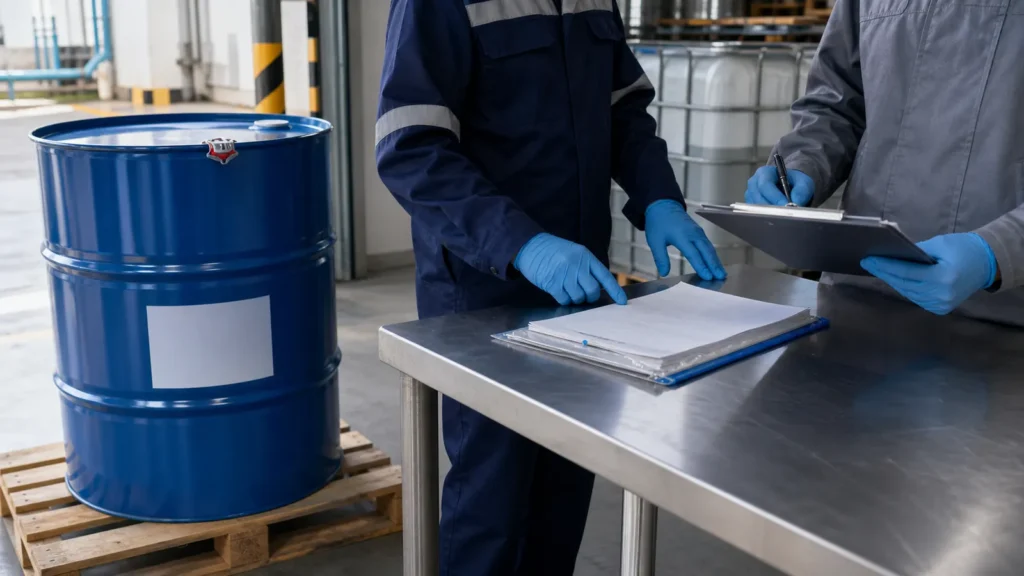
The purchase order has to define the grade before the document pack can support a release decision.
An INCI name is the start of the description
Sodium Lauroyl Glutamate identifies the surfactant chemistry. Purchasing still needs the commercial form, declared content, other supplied components, packaging and test methods before the name becomes an orderable grade.
For KWLG-25, the current INNO product record lists a colorless to light-yellow liquid with 24-26% Sodium Lauroyl Glutamate. The listed supplied composition also includes 73-76% water, 0-0.5% Sodium Chloride, 0.2-0.6% Phenoxyethanol and 0.1-0.3% Caprylyl Glycol, with a 200 kg pack size. Those fields make KWLG-25 a defined liquid grade rather than a generic INCI name.
The purchasing description should therefore carry the exact supplier grade, declared composition or applicable specification revision, physical form and pack. If your formula or market requires a particular composition statement, preservative approach or document language, settle it before the first order rather than at customs or incoming QC.
The broader Sodium Lauroyl Glutamate guide explains how one INCI can appear in different supplied forms. For purchasing, the consequence is immediate: two materials with the same main INCI can create different water balances, handling jobs and qualification files.
Build the purchasing specification from stable requirements
A good first batch often tempts teams to copy its COA results into the permanent purchasing specification. That creates limits from one observation, not from product capability, process need or an agreed method. The purchasing specification should instead capture the requirements that remain meaningful from lot to lot.
| Purchasing field | What it should establish | Why it matters |
| Supplier and grade | The exact commercial material being approved | Prevents substitution by INCI name alone |
| Composition basis | What the stated percentage represents and which co-components are declared | Supports equal-basis comparison and formulation review |
| Appearance | The agreed description and observation conditions | Gives receiving a fast first comparison |
| Test items and limits | The properties that control identity, use or quality | Creates a release decision rather than a document archive |
| Test methods and conditions | How each reported result is produced | Keeps supplier and incoming results comparable |
| Packaging and net quantity | Container type, pack size and quantity basis | Connects the material to storage, handling and inventory |
| Document revision | The approved version of the controlled specification | Prevents an old range from following a new grade |
Choose the test items with R&D, QC and supplier quality. Set any pH, density, viscosity or sampling requirements from the controlled KWLG-25 commercial specification and the customer’s approved method. A similar liquid surfactant is a poor substitute for grade-specific evidence.
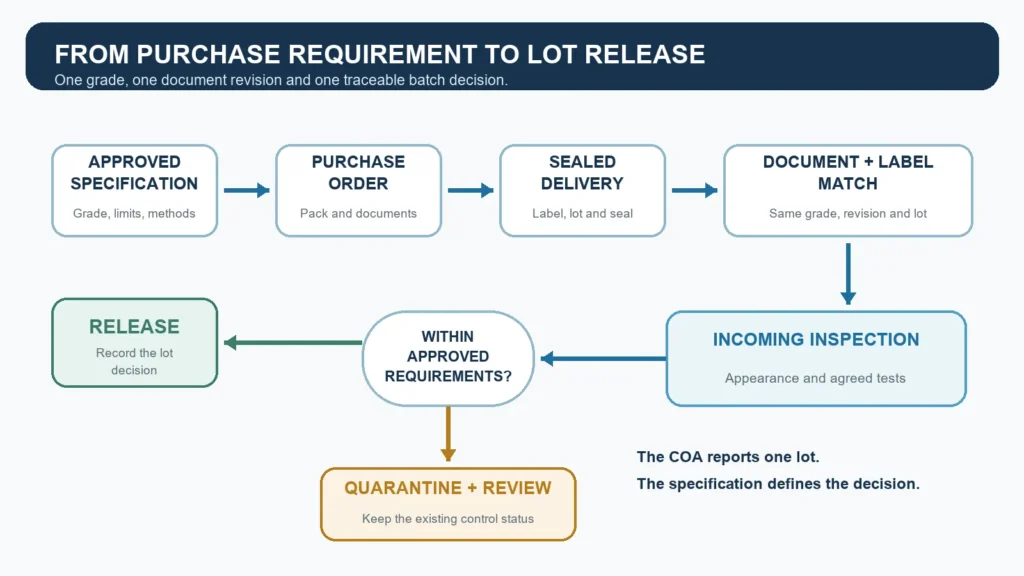
The specification carries the requirement forward; the batch COA and incoming result provide the evidence for one lot.
Give each document one job
The specification defines the agreed acceptance requirements. The TDS supports technical evaluation and use. The SDS supports hazard communication and safe handling. The COA reports listed results for a specific batch. The product label and shipping records connect those documents to the physical delivery.
The published guide to TDS vs SDS vs COA covers the general differences in detail. For a KWLG-25 purchase, the useful test is whether every document points to the same product name, grade, supplier and current revision, and whether the COA lot matches the label on the delivered container.
A representative COA can help procurement review the reporting format before an order. It cannot release a future lot. The final batch COA must identify the lot that was shipped, and QC should compare it with the approved specification rather than with another batch’s attractive numbers.
Receiving can catch expensive errors before sampling
The first inspection happens while the container is still closed. Receiving can confirm the supplier and grade, lot number, net quantity, container type, seal condition, label legibility, damage and quality status. A mismatch here is usually cheaper to resolve than a mismatch discovered after the drum has entered production.
Appearance is then compared under the site’s approved conditions. KWLG-25 is listed as colorless to light yellow, but that broad description is not a license to improvise a pass or fail decision. Lighting, container depth, temperature and an approved reference can all affect what the operator sees. An unusual appearance should trigger quarantine and review, not an instant diagnosis.
The FDA cosmetic GMP inspection checklist highlights raw-material identification, lot information, control status, sampling and examination under written procedures. Those are practical receiving controls, even when the final procedure is tailored to the plant and destination market.
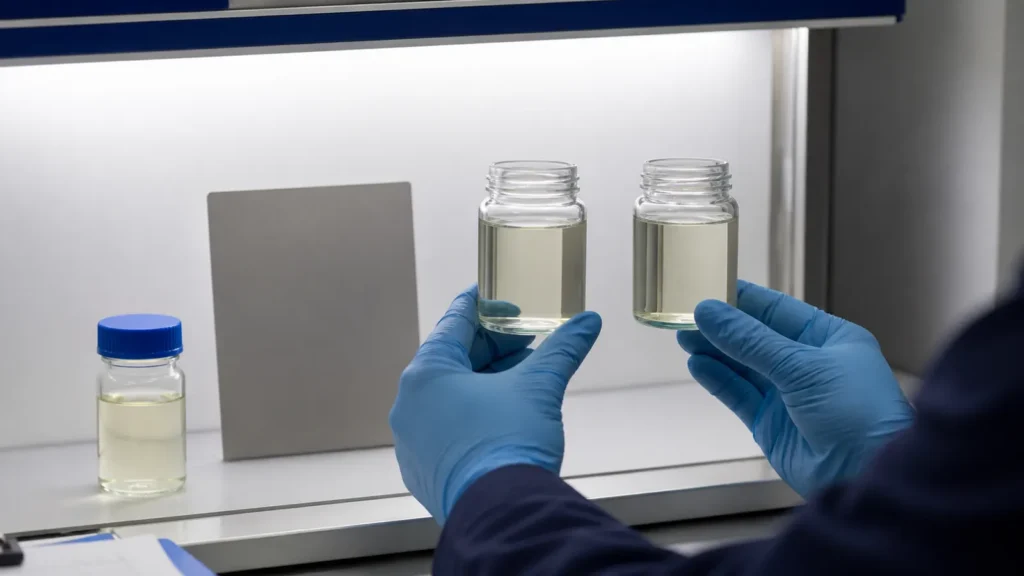
A retained reference makes an appearance conversation more precise, especially when two people describe pale yellow differently.
Analytical release needs an agreed method
Numbers become comparable only when the methods and conditions are comparable. A pH result without dilution and temperature, or a content result without its analytical basis, can create a false disagreement between supplier and customer. The same applies to appearance, color, density and any chromatographic or compositional test selected for the grade.
Before the first receipt, agree which items are checked on every lot, which are reviewed from the supplier COA, which are tested periodically, and what triggers confirmation or expanded testing. The customer’s supplier-qualification and risk process sets that schedule for the plant and product.
When a result is outside the agreed limit or differs materially from the COA, keep the lot under its existing control status. Confirm sample identity, method, instrument condition, units and calculation before escalating the difference. Share the lot number, document revision, test method and result with the supplier. “The material failed” is a conclusion; the useful conversation starts with how it was measured.
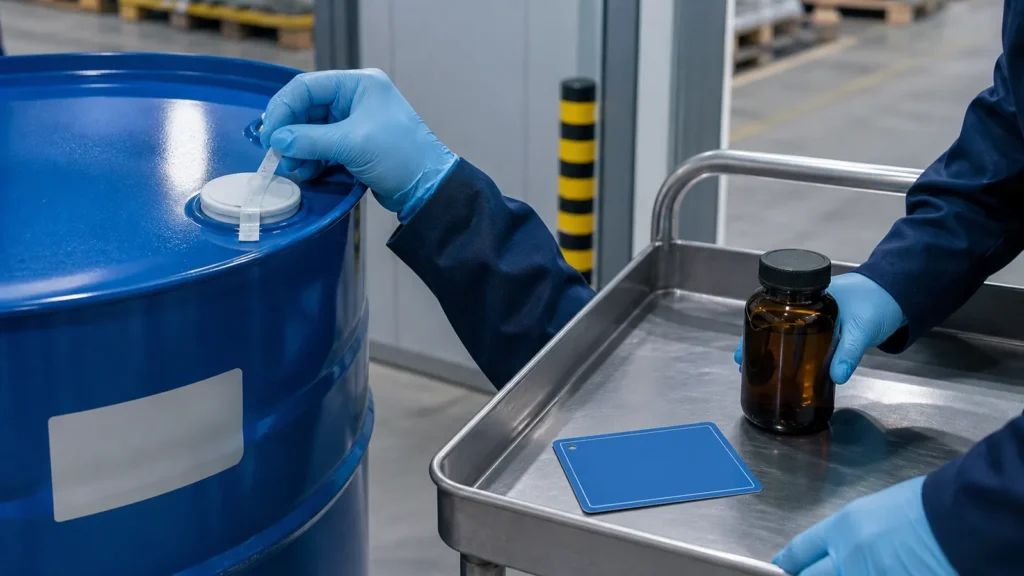
Label, lot, seal and control status are checked before the sample begins its trip through QC.
Close the handoff before the first purchase order
The fastest supplier qualification usually starts with a short, complete request. Tell us the intended application, destination market, required grade and pack, the specification fields your QC team controls, the document language, any supplier questionnaire and the batch information needed before shipment. We can then match the request against current KWLG-25 product information and confirm which controlled documents are available for review.
This is also the right point to compare commercial value. A lower price is useful only when the delivered material, composition basis, pack, documents and release workload match the approved requirement. KWLG-25 is designed as a ready-to-handle liquid grade at 24-26% Sodium Lauroyl Glutamate, so the value discussion should include dosing convenience, supplied water, transport and storage as well as the quoted price per kilogram.
Request current KWLG-25 qualification information from INNO
Questions buyers ask before approving the grade
Can a batch COA replace the purchasing specification?
No. The purchasing specification defines the approved requirements and methods, while the COA reports listed results for one production lot. Incoming release compares the batch evidence with the approved specification.
Should every incoming lot be retested for every COA item?
The testing frequency should follow the site’s supplier-qualification, risk and written quality procedure. Agree which checks occur on every lot, which rely on the supplier COA and which are verified periodically before routine purchasing begins.
What should we do if the liquid looks darker than the approved retain?
Keep the lot under quarantine while you confirm lighting, temperature, sample depth, container condition, lot identity and the agreed appearance method. Release or rejection should follow the approved specification and deviation process.
Which details should appear on the first KWLG-25 purchase order?
Include the exact supplier grade, approved specification revision, pack and quantity basis, required documents, label and lot requirements, delivery conditions and any pre-shipment approval step agreed with the supplier.