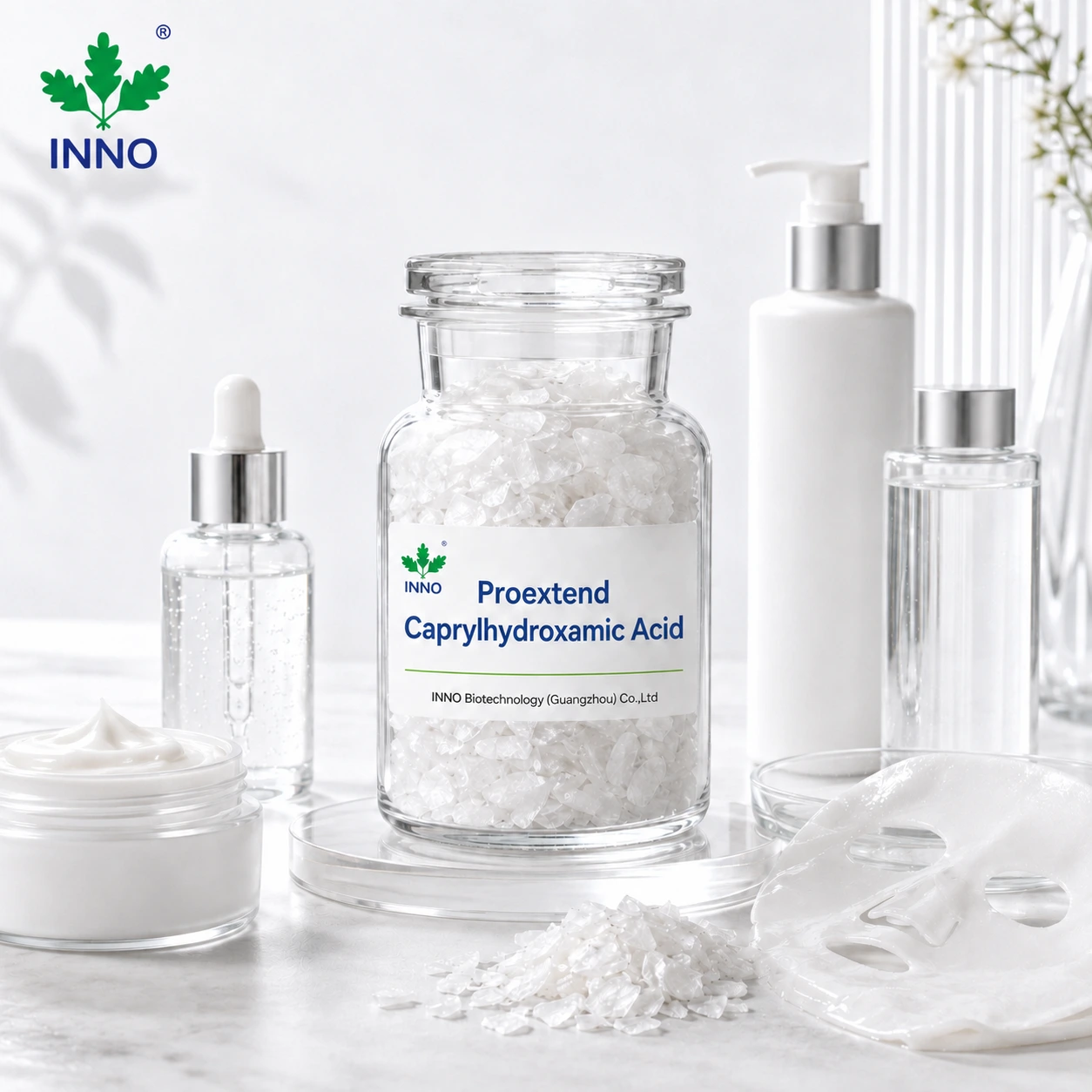
We supply Caprylhydroxamic Acid cosmetic grade as INNO Proextend Caprylhydroxamic Acid, a cosmetic-grade organic-acid preservation ingredient with chelating support.
Key Benefits of Proextend Caprylhydroxamic Acid
- Proextend Caprylhydroxamic Acid provides focused control of mold and yeast at a low use level. It directly addresses the fungal weakness that can remain in a polyol-heavy preservation system.
- Its chelating and antioxidant functions help limit color change and oil rancidity during storage. This is useful in formulas containing oxidation-sensitive oils, extracts or color-sensitive components.
- The material is derived from plant-based caprylic acid and is PEG free. It contains no formaldehyde releasers or parabens, which supports streamlined and naturally positioned preservation systems.
- The grade can work from 0.05% in leave-on products. At this low level, it does not materially change the odor, clarity or skin feel of the finished formula.
- Caprylhydroxamic Acid works well with 1,2-Hexanediol, Ethylhexylglycerin and other preservation partners. INNO can help select the combination and confirm it through challenge testing.
Recommended applications
- Use Proextend Caprylhydroxamic Acid in serum, toner and clear water-based products when the preservation system needs stronger mold and yeast control.
- It fits cream, lotion and facial mask containing oils or extracts that may benefit from its chelating and antioxidant contribution.
- In shampoo, conditioner and facial cleanser, the low use level adds focused fungal protection without changing foam, odor or skin feel.
- The grade is particularly useful in streamlined preservation systems built with 1,2-Hexanediol, Ethylhexylglycerin or other compatible partners.
Formulation and commercial details
| Grade | Cosmetic Grade |
|---|---|
| Packaging | 25 kg container |
| How to use | Dissolve the ingredient completely and add it at the recommended stage for the selected base. Complete preservation challenge testing, stability testing and destination-market regulatory review on the finished product. |
| Active ingredient | Caprylhydroxamic Acid |
| Physical properties | White crystalline flakes |
| Performance | Organic-acid preservation ingredient with chelating support. |
| Compliance | Use the ingredient within the applicable cosmetic regulations of the destination market and verify the finished preservation system by challenge testing. |
Choosing between related INNO products
Choose Caprylhydroxamic Acid when mold and yeast control and chelation are priorities. Combine it with suitable polyols or preservatives for broader coverage.
Frequently asked questions
What gap does Caprylhydroxamic Acid address in a glycol-based preservation system?
It strengthens mold and yeast control, which is often the area that needs more support in a polyol-heavy system. Pair it with the appropriate antibacterial components rather than expecting one material to carry the full preservation burden.
A CHA-preserved formula darkened during storage. Which failure modes need to be separated?
Separate microbial, metal-ion and oxidation causes instead of assuming preservative failure. Compare the base with and without the sensitive oil, extract or colorant, then review chelation, air exposure and packaging alongside the challenge-test result.
Why is a challenge test still required when the preservation blend contains Caprylhydroxamic Acid?
The finished result depends on the complete formula, raw-material bioburden, package and use pattern. A challenge test confirms that the selected partners protect the actual product rather than only showing activity in a simplified laboratory medium.
Why work with INNO?
INNO can build and test mold-and-yeast control around the customer’s complete formula. Samples and qualification documents are available before commercial ordering.