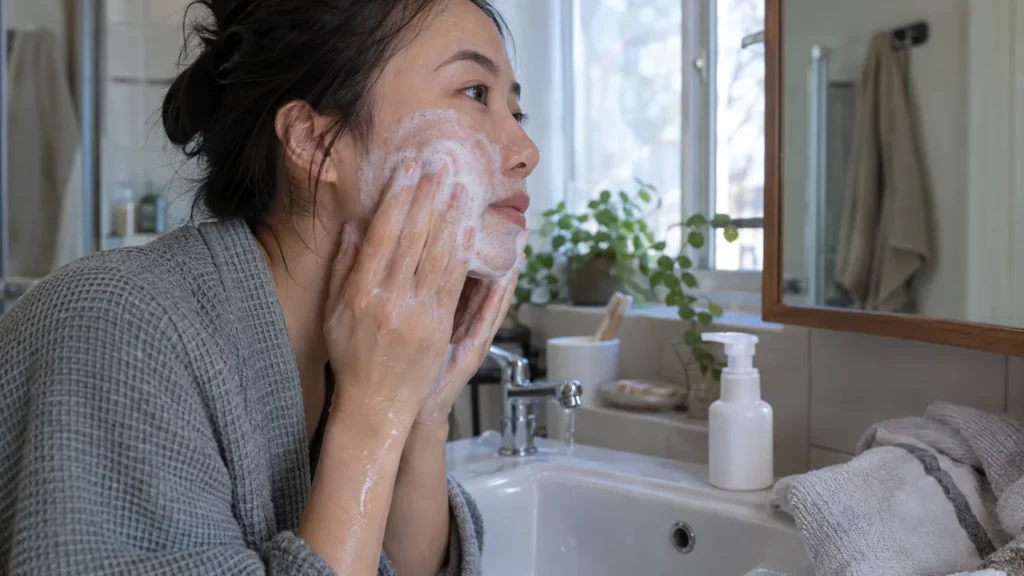
In a foaming facial cleanser, Potassium Cocoyl Glycinate must deliver more than foam volume. Foam generation, bubble structure, rinse feel, viscosity and package compatibility all need to work within the same surfactant system. The foam should arrive quickly, feel pleasantly dense, survive long enough to finish the wash and rinse without leaving the face in a long-distance relationship with residue.
Potassium Cocoyl Glycinate can provide a strong starting point for amino acid surfactant systems, but it does not work alone. Active matter, co-surfactants, pH, fragrance, electrolytes, rheology and packaging all take turns changing the result. Good development gives each variable one job at a time.
Give the foam a job description before choosing ingredients
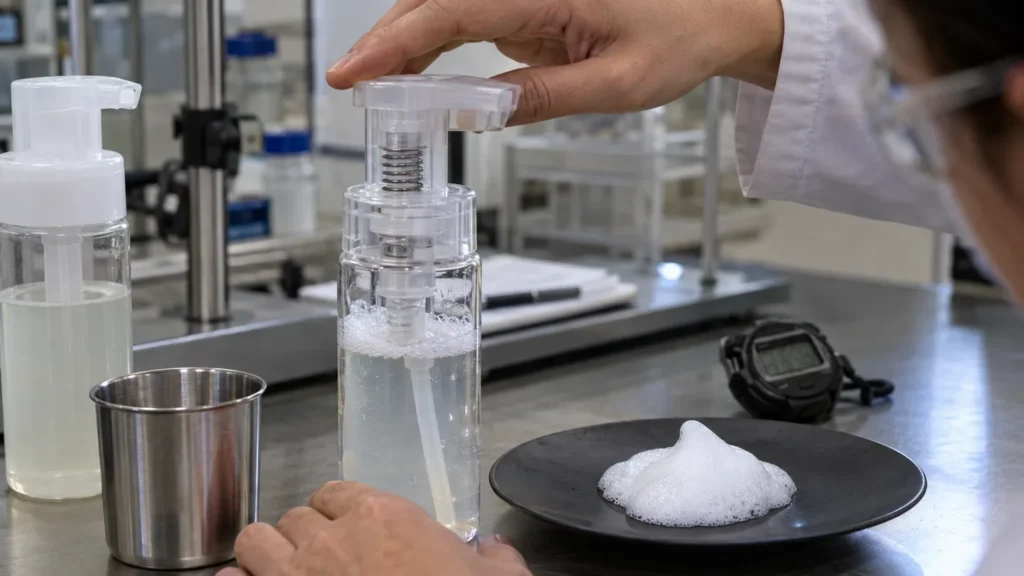
“Rich foam” is too vague for a useful brief. A foaming pump needs low enough resistance to recover and enough surfactant efficiency to create an attractive mound in one or two strokes. A bottled gel may need more body, fast flash foam during hand rubbing and a clean break during rinsing. A cream cleanser may value cushion over maximum volume.
Define the format, package and use conditions first. Then describe foam with separate observations: generation speed, initial volume, bubble size, creaminess, drainage, persistence and behavior in the presence of sebum or makeup. A single foam-height number cannot explain all of them.
Rinse feel also needs its own language. Decide whether the target is very quick, slightly conditioned, powdery-clean or softly lubricated. The brief should tell the formulator what “clean” means for this product rather than asking the surfactant to read minds.
Start with active surfactant contribution, not drum percentage
Commercial Potassium Cocoyl Glycinate grades may be concentrated powders or water-based liquids. Comparing them at the same as-supplied percentage gives the concentrated grade much more surfactant work to do. Set a target active contribution, verify the supplier’s test basis and calculate the supplied dosage from there.
Hold the total active surfactant contribution steady during the first screen. This makes it easier to judge what a co-surfactant ratio, fragrance dose or pH change actually did. Once the architecture is promising, the total surfactant level can be adjusted against cleansing, foam, mildness goals and cost.
Water must be rebalanced whenever the grade changes. With a liquid raw material, carrier water occupies formula space. With a powder, the formula must provide the water and process needed for complete dispersion. Ignoring either fact creates a comparison that looks precise and answers the wrong question.
Build the surfactant blend around the weak point
Potassium Cocoyl Glycinate is an anionic amino acid surfactant. In practice, formulators often screen it with amphoteric or nonionic co-surfactants to tune foam, clarity, viscosity and after-feel. The best partner is the one that fixes the base’s weak point without introducing a larger one.
If foam arrives slowly, look at dynamic foam generation and package output before simply raising total surfactant. If the foam is tall but watery, screen the blend for bubble texture and drainage. If the cleanser rinses too abruptly or feels draggy, review the complete surfactant ratio and any polymer or emollient load.
Change one major ratio at a time and keep active matter constant. Otherwise, a larger surfactant dose can masquerade as clever synergy. The beaker may applaud, but the conclusion will not survive scale-up.
Fragrance and oils are small additions with loud opinions
Fragrance, essential oils, emollients and oil-soluble actives can disturb interfacial films, change micellar structure or require more solubilization. The visible result may be lower foam, larger bubbles, cloudiness, viscosity loss or delayed separation.
First build a stable unfragranced base. Then add the intended fragrance at its real target level and repeat the foam, appearance and viscosity checks after equilibration. A fragrance-free control makes it obvious whether the perfume changed the system or merely arrived at the scene of the crime.
Do not hide a compatibility problem with extra solubilizer before identifying the cause. A solubilizer can help, but it also joins the surfactant system and may alter foam or rinse feel. The cleanest fix may be a different fragrance, a lower oil load, another co-surfactant ratio or a revised product format.

Keep pH, electrolyte and water quality visible
pH can influence the ionization and phase behavior of amino acid surfactant systems. It can also alter polymer response, preservative performance and skin feel. Choose the finished pH from the complete product brief, then record both the measurement method and temperature.
Adjust pH in a controlled sequence and allow the sample to equilibrate before judging clarity or viscosity. A warm, freshly mixed cleanser can look cooperative and change its mind overnight.
Electrolytes from raw materials, neutralization, water and added salt can change foam and rheology in a concentration-dependent way. A recent study of lauroyl glutamate salts, a related amino acid surfactant family rather than PCG itself, found that foam response changed with both surfactant and salt concentration. The practical lesson is not that one salt level transfers to every formula. Screen additions in small steps under the actual surfactant concentration.
Water hardness can also affect cleansing and foam. Use the same water source for matched trials, then include the relevant hard-water condition if the product will be manufactured or used across markets with different water profiles.
Match rheology to the package, not to a beauty shot
A high viscosity reading looks reassuring in a laboratory photo, but a foaming pump usually needs a mobile liquid that refills its chamber cleanly. A squeeze bottle or tube may need more structure to control dosing. Define a functional dispensing window before selecting the thickening route.
Salt, surfactant ratio, pH and polymers can all build or destroy viscosity. Screen them as different routes rather than piling them into one rescue batch. Measure after a defined rest and temperature history, then check pump recovery, leakage, stringing and output weight in the intended package.
Foam generated by the package deserves its own test. Mechanical pumping introduces air differently from hand shaking or a rotor test. Use bench foam methods to understand the system, but let the retail package have the final vote.
Where KWGCK-30 and KWGCK-95 enter the development route
INNO supplies Potassium Cocoyl Glycinate as KWGCK-30 liquid and KWGCK-95 powder. Both can support facial-cleanser development, but their supply forms ask different things from the formula and the production line.
| Development question | KWGCK-30 liquid | KWGCK-95 powder |
|---|---|---|
| Documented addition route | Add directly to the water phase and stir well | Disperse in cold water under stirring, then heat |
| Useful starting situation | Direct liquid dosing fits the available equipment and batch routine | A concentrated input and lower delivered water are valuable |
| Composition review | Includes Aqua, Phenoxyethanol, Caprylyl Glycol and Potassium Chloride in the full declaration | Includes Aqua and Potassium Chloride in the full declaration |
| Main process check | Metering, aeration and water balance | Wetting, complete dispersion and temperature history |
| Best comparison basis | Verified active contribution in the same finished cleanser and package | |
KWGCK-30 is not simply KWGCK-95 with extra water. Its complete declaration includes additional components that belong in the preservation and ingredient review. KWGCK-95 should not be treated as automatically pure or anhydrous either. Its declared water and Potassium Chloride still count.
A compact screen can answer the important questions
Start with one agreed active surfactant contribution and one package target. Prepare a control base, then screen a small number of purposeful changes: co-surfactant ratio, fragrance load, pH route and one rheology approach. Keep the water, process and test timing consistent.
Record appearance after equilibration, viscosity at a stated temperature, pump output, initial foam, foam texture, drainage, rinse feel and any residue on the package. Move only the promising candidates into accelerated stability and preservation work.
At pilot scale, repeat the same observations and add transfer time, aeration, filling behavior and batch-to-batch consistency. A formula that behaves beautifully under a small propeller mixer may become a foam party under a production agitator. Better to invite that surprise to the pilot batch than to launch day.
Frequently asked questions
Is Potassium Cocoyl Glycinate enough as the only surfactant?
It can be screened alone, but many commercial cleansers use a blend to tune foam speed, texture, viscosity and rinse feel. Let the product brief decide whether a co-surfactant earns its place.
Why did foam drop after adding fragrance?
Fragrance components can change interfacial behavior and micellar structure. Compare with an unfragranced control, confirm the real dosage and then screen fragrance, solubilization or surfactant-ratio changes separately.
Should a foaming facial cleanser be thick?
Only as thick as the package can handle reliably. Foaming pumps usually need a mobile liquid with good chamber refill, while a bottle or tube may require more body.
What should a formulator send when requesting an INNO sample?
Send the target format, active surfactant level, pH, co-surfactants, fragrance or oil load, water quality, packaging and batch process. These details help select the more practical PCG supply form.
Request a PCG sample for your facial-cleanser format
Share your target foam character, pH, fragrance level, package and production constraints with INNO. We can provide the current KWGCK-30 or KWGCK-95 TDS, SDS, representative COA fields and an appropriate sample for your development screen.