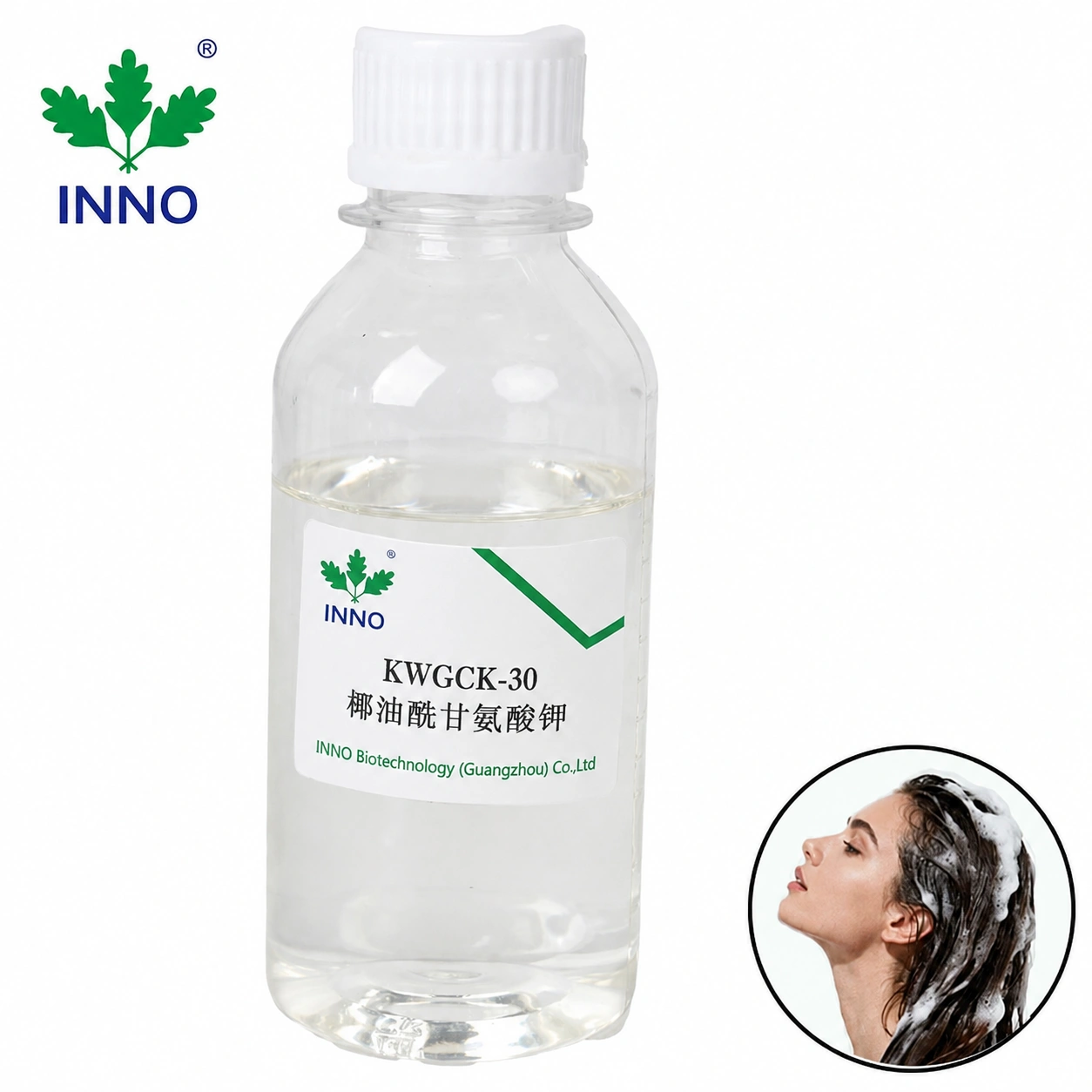
We supply liquid Potassium Cocoyl Glycinate as INNO KWGCK-30, a cosmetic-grade liquid potassium cocoyl glycinate surfactant for fast foam and clean-rinse systems.
Key Benefits of Liquid Potassium Cocoyl Glycinate (KWGCK-30)
- KWGCK-30 combines the solubility of a potassium glycinate with the convenience of a liquid grade. It can be dosed directly into the water phase and is easy to use in clear or pump-foam systems.
- The surfactant develops foam quickly and produces abundant, elastic lather with an easy rinse. The fresh finish is well matched to facial cleansers for oily and combination skin.
- Blending KWGCK-30 with betaine or an alkyl polyglucoside gives a practical route to balanced foam, mildness and viscosity. This reduces development time when several sensory targets must be met together.
- The grade has a mild, skin-compatible profile and comes from plant-derived starting materials. It is readily biodegradable and suitable for daily cleansing products.
- Its potassium-salt structure is the main advantage when strong solubility is required. The liquid format also removes the powder-dispersion step from routine production.
| APHA | ≤80 |
| Solid content | 30±2 |
| Heavy Metals (PPM) | ≤20 |
| Arsenic Content (PPM) | ≤2 |
Recommended applications
- KWGCK-30 suits pump foams and liquid facial washes for oily or combination skin, where fast foam and a clean finish are central to the product position.
- Use it in clear cleansing gels that benefit from potassium-salt solubility and direct water-phase dosing.
- In shampoo, body wash and hand wash, pair it with betaine or APG to build balanced foam and mildness without an extended screening program.
- The liquid grade is also useful in surfactant concentrates that need easy metering, strong solubility and reliable foam across routine production.
Formulation and commercial details
| Grade | Cosmetic Grade |
|---|---|
| Packaging | 200 kg PE drum |
| Gross weight | 209.5 kg |
| Packing dimensions | Ø58xH91cm |
| Storage | Store sealed in a dark, cool, dry place (current TDS). |
| How to use | Add the liquid through the aqueous phase under controlled agitation. Set the final pH and viscosity after all surfactants, electrolyte, fragrance and the preservation system are present. |
| Compatibility | Compatible with the co-surfactants described above. Set the final electrolyte, polymer, fragrance and preservation system in the complete formula. |
Choosing between related INNO products
KWGCK-30 is the liquid potassium glycinate for easy dosing. KWGCK-95 is the concentrated powder for high-solids systems.
Frequently asked questions
The selected pump gives wet, collapsing foam with KWGCK-30. Which variables matter?
Check the finished viscosity, pump mesh, air-to-liquid ratio and fragrance load together. Qualify the raw formula and the dispenser as one system, because a strong beaker foam result does not guarantee a dry, stable pump output.
How does liquid Potassium Cocoyl Glycinate differ from liquid Sodium Cocoyl Glycinate?
KWGCK-30 emphasizes solubility, fast lather and an easy rinse. The sodium grade is the better option when the base needs more viscosity-building support and a denser cream-like foam.
How should a powder glycinate formula be converted to liquid KWGCK-30?
Convert both grades to active surfactant matter, remove the water contributed by the liquid grade from the batch, and keep the original co-surfactant ratio constant for the first trial. Rebuild viscosity only after the foam target has been recovered.
Should salt be the first choice for correcting viscosity in a KWGCK-30 pump foam?
Not automatically. First confirm the viscosity range accepted by the pump, then run a small electrolyte curve and watch foam output at each point. A thicker beaker sample can give poorer dispensing if the actuator cannot draw and aerate it consistently.
Why work with INNO?
Our application team can help tune potassium glycinate blends with betaine or APG. INNO supplies samples and qualification documents for the transition from pilot to production.