Matching active matter fixes one arithmetic difference. It does not make a Sodium Cocoyl Glutamate powder and an aqueous Disodium Cocoyl Glutamate blend chemically or operationally identical.

A formula team may do the conversion correctly and still see a thinner batch, a different salt response or foam that builds and drains differently. The result is not proof that the calculation failed. It means the replacement changed more than the quantity of surfactant solids.
Begin with a difference ledger. Write down everything that changed when the liquid grade entered the formula. The list should include the surfactant composition, supplied water, pH adjustment, ionic inputs, co-surfactant ratios and processing sequence. Then remove one difference at a time in paired samples.
Replacement rule: Match active contribution first. Then rebuild viscosity and foam around the composition that is actually in the new batch.
The formula changed in six places, even if one line was replaced
Surfactant basis
Compare both grades on one declared basis. Keep the target active contribution and the basis source in the trial record.
Water
Remove the water carried by the liquid grade from the separate water phase so the batch still totals 100 percent.
Listed composition
A powder of Sodium Cocoyl Glutamate and a liquid blend containing disodium and sodium forms are not the same ingredient mixture.
pH route
Record both the final pH and how the formula reached it. Acid or base quantity becomes part of the ionic balance.
Other dissolved inputs
Count electrolyte from salts, buffers, preservatives, extracts and carried-in raw-material components.
Process history
Powder dispersion and liquid addition place the surfactant into different batch stages and may change mixing time, temperature and air entrainment.
If the quantity conversion itself is uncertain, settle it before troubleshooting rheology. The surfactant active-matter calculation guide explains the active and water corrections separately. This article starts with those two controls already established.
Equal final pH does not guarantee the same micellar state
Viscosity in a surfactant cleanser comes from aggregate structure, not from active percentage alone. Head-group ionization, counterions and co-surfactants influence the size, shape and relaxation of those aggregates. A study of a sodium lauroyl sarcosinate and hydroxysultaine model found that pH and added counterions changed low-shear rheology. The system is not cocoyl glutamate, so its numerical results should not be transferred. It does show why pH and ion history need their own control in an amino-acid-surfactant replacement. See the counterion and viscosity study.
Two samples can finish at the same pH after receiving different amounts of acid or base. That means their ionic composition may differ. Record the initial pH after all surfactants are combined, the adjustment solution concentration, the mass added, mixing time and final reading temperature. If one route adjusts pH before the co-surfactant while the other adjusts it after, the comparison also contains a sequence change.
Do not correct a thin replacement sample by immediately adding more acid or salt. First repeat the original and replacement samples with the same pH procedure. If the viscosity difference remains, move to the electrolyte and co-surfactant branches.
The old salt curve belongs to the old surfactant balance
Charged micelles respond to ions, but the direction and size of the response depend on the complete formulation. In a model alpha-gel made with disodium N-dodecanoylglutamate, long-chain alcohol and water, sodium chloride changed lamellar spacing and viscosity. The published system is not a KWCG cleanser. Its value here is narrower: an electrolyte can reorganize an amino-acid-surfactant assembly rather than act as a simple universal thickener. See the rheology study on the disodium glutamate model.
Repeat the salt or electrolyte screen after all intended surfactants, fragrance and preservative inputs are present. Keep the base homogeneous and divide it by weight. Include an unsalted control and use small, evenly spaced additions chosen for the project. Measure after equal mixing and rest times. A single rescue addition gives one result but does not reveal whether the formula sits below, near or beyond a viscosity peak.
Co-surfactant ratios may move even when total active does not
Suppose the original formula contains KWCG-95 plus an amphoteric co-surfactant. Replacing the powder with KWCG-25 can preserve total active matter while changing the share contributed by Sodium Cocoyl Glutamate, Disodium Cocoyl Glutamate and the amphoteric material. The micellar mixture now has a different composition.
Research on mixed amino-acid surfactants shows that foam properties can depend on mixture composition and water ions. One study of glycinate and glutamate surfactants found different interfacial and foam behavior in deionized and tap water. It used potassium cocoyl glycinate and sodium lauroyl glutamate, not KWCG-95 or KWCG-25. The relevant lesson is to hold water quality and surfactant ratio constant during a foam comparison. See the published mixed-surfactant foam study.
If the replacement changes foam, do not describe it only as more or less. Record how quickly foam forms, initial volume, bubble texture, drainage and retained height at a defined time. Decide which of those observations matters to the intended package and use condition.
The current INNO grades define two different starting points
INNO KWCG-95 is currently listed as Sodium Cocoyl Glutamate, a white solid powder with 93.5 to 100 percent listed content. Its standard pack is 15 kg.
INNO KWCG-25 is currently listed as a pale yellow or colorless transparent liquid containing 75 percent water, 20 percent Disodium Cocoyl Glutamate and 5 percent Sodium Cocoyl Glutamate. Its standard pack is 200 kg.
The composition difference is central to the trial. KWCG-25 is a different supplied composition from a hypothetical 25 percent dilution of KWCG-95. A fair first prototype can match the selected active basis and correct the water balance, but the formulator should still expect to recheck pH adjustment, electrolyte response, co-surfactant ratio, appearance, viscosity and foam under the finished formula’s conditions.
Pair the samples before changing the formula again
| Sample | Purpose | Required controls | Question answered |
|---|---|---|---|
| Original control | Reproduce the accepted KWCG-95 formula | Current raw-material lots, documented process and test method | Is the baseline reproducible now? |
| Replacement control | Use KWCG-25 at the matched active basis | Correct supplied water and total batch mass | What changes before further optimization? |
| pH-path pair | Compare one defined adjustment route | Same surfactant ratio, electrolyte and rest time | Does the adjustment route explain part of the difference? |
| Electrolyte series | Map the new viscosity response | One homogeneous finished base divided by weight | Where is the usable region for the replacement base? |
| Co-surfactant pair | Test one ratio change | Matched active, water, pH and electrolyte condition | Does the surfactant mixture drive viscosity or foam? |
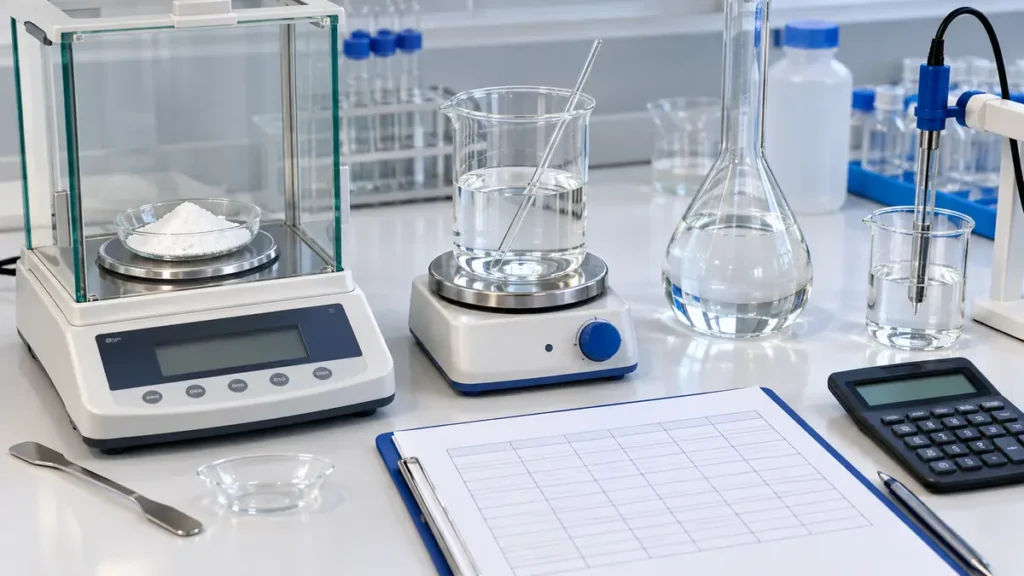
Keep viscosity and foam methods fixed across the pairs. For viscosity, record instrument, geometry or spindle, speed, sample temperature, conditioning and reading time. For foam, record concentration, water hardness, temperature, generation method and observation time. ASTM D1173-23 requires reporting concentration, temperature, water hardness and foam height, and it notes that the method does not necessarily correlate with a specific end use. The ASTM D1173 page is a useful reminder that a foam number needs its method.
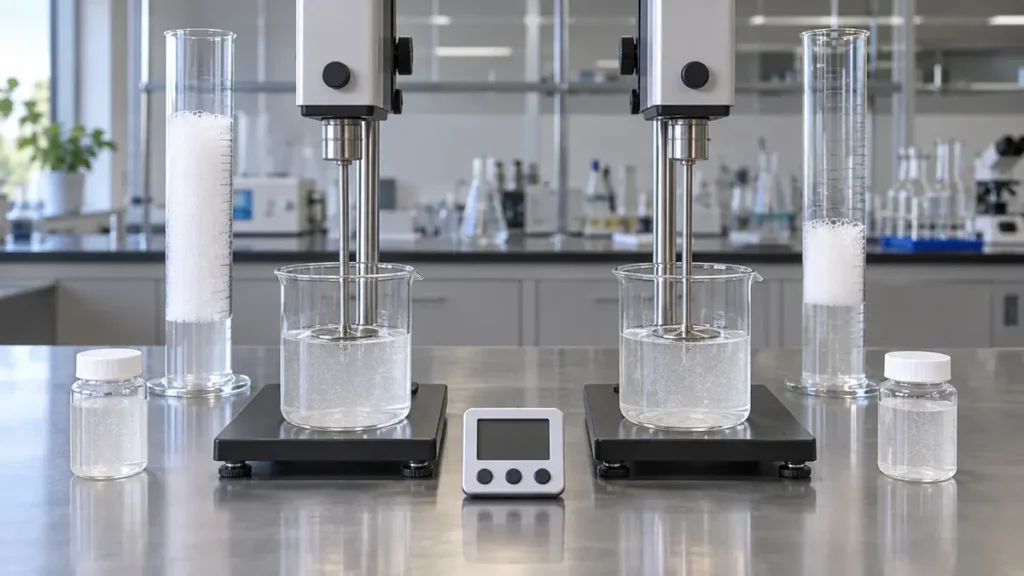
Choose the first variable from evidence. If active and water were not matched, fix them first. If final pH matches but acid addition differs, isolate the pH route. If viscosity changes only after fragrance or preservative, move the investigation to the complete finishing sequence. If foam changes while viscosity does not, examine surfactant ratio, water quality and the foam method before altering the thickener.
Frequently asked questions
Does equal active matter guarantee equal viscosity?
No. Equal active matter controls surfactant quantity, while composition, pH route, ions, co-surfactants and process history still affect rheology.
Use equal active matter as the first paired sample, then test one remaining difference at a time.
Can KWCG-95 and KWCG-25 be used at the same as-supplied percentage?
No. Their listed concentrations, water contributions and surfactant compositions differ, so equal as-supplied percentages create different formulas.
Calculate the first prototype on the project’s chosen active basis and return the total formula to 100 percent.
Should we add more salt when the KWCG-25 version is thinner?
Run a new controlled electrolyte series after matching active matter, water and pH instead of making one unmeasured rescue addition.
The original salt level may sit in a different part of the replacement formula’s viscosity response.
Why did foam change even though the final pH is the same?
The surfactant mixture, water quality, adjustment history and test conditions may differ even when the final pH reading matches.
Compare matched samples using one foam-generation method and record formation, drainage and retained height separately.
What data should accompany a replacement review?
Provide both product lots, the original formula, active and water calculations, pH procedure, electrolyte inputs, processing sequence and matched test results.
Include the viscosity method and the foam test conditions so the two samples can be compared on the same basis.
Set up a matched replacement trial
Send INNO the original KWCG-95 formula, intended KWCG-25 quantity, batch size, active and water balance, pH procedure, co-surfactants, electrolyte inputs and current viscosity and foam methods. Use those inputs to frame a same-active comparison and a replacement trial plan.