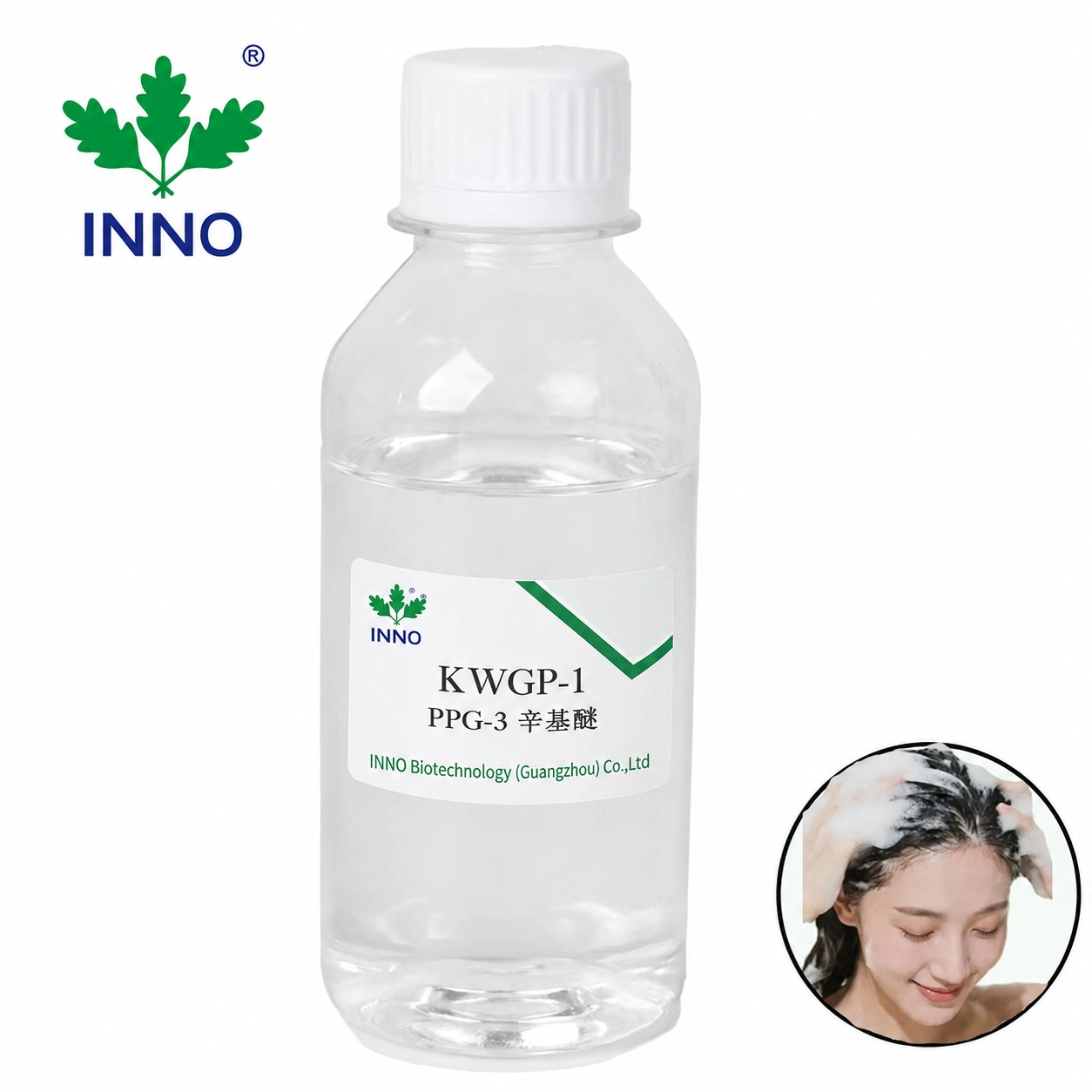
We supply PPG-3 Caprylyl Ether as INNO KWGP-1, a cosmetic-grade nonionic conditioning and sensory additive for wet combing, softness and light after-feel.
Key Benefits of PPG-3 Caprylyl Ether (KWGP-1)
- KWGP-1 is a lightweight alternative to silicone oil in shampoo, conditioner and cleansing products. It improves smoothness without the heavy deposition that can leave hair flat after repeated washing.
- Wet hair becomes easier to comb, while dry hair stays smooth, light and full. The grade also helps reduce static, split ends and the rough feel associated with damaged cuticles.
- KWGP-1 adheres evenly to damaged areas of the hair. It can be used alone in silicone-free systems or with a reduced silicone level to maintain slip and improve distribution.
- The material has high purity and very low residual alcohol. This supports stable shampoo coacervate performance and reduces the risk of unwanted odor or instability from residual processing components.
- Besides hair conditioning, KWGP-1 provides solubilizing, refatting and foam-support functions. Its low viscosity makes it easy to add to shampoo, conditioner, body wash and facial cleanser.
| Acid value | ≤0.5 |
| Chroma | <100 |
| Hydroxyl value | 185-197 |
Recommended applications
- Use KWGP-1 in silicone-free shampoo when the brief calls for wet combing, dry smoothness and volume without heavy silicone deposition.
- It can be added to two-in-one shampoo, conditioner and hair mask to improve slip, reduce static and make damaged hair easier to manage.
- In facial cleanser and body wash, the grade provides refatting and sensory conditioning without a sticky or overly coated rinse.
- KWGP-1 also fits clear hair-care products that need a low-viscosity solubilizer and a lightweight alternative to conventional silicone oils.
Formulation and commercial details
| Grade | Cosmetic Grade |
|---|---|
| Packaging | 50 kg PE drum |
| Gross weight | 53.6 kg |
| Packing dimensions | Ø40xH56cm |
| Storage | Store sealed in a cool, dry, ventilated place; use the current TDS/SDS. |
| How to use | Add the liquid through the aqueous phase under controlled agitation. Set the final pH and viscosity after all surfactants, electrolyte, fragrance and the preservation system are present. |
| Compatibility | Use it in the complete surfactant or emulsion system and set the final viscosity, clarity and stability after all ingredients are present. |
Choosing between related INNO products
KWGP-1 is a conditioning and sensory additive. Use it alongside the cleansing system rather than as the primary surfactant.
Frequently asked questions
Can KWGP-1 replace dimethicone at the same percentage?
Treat it as a performance replacement, not an automatic one-for-one swap. Benchmark wet combing, dry smoothness, shine, volume and residue against the current silicone system, then set the level that matches the desired hair feel.
How can build-up on fine hair be detected during a KWGP-1 evaluation?
Use repeated wash-and-dry cycles rather than a single salon test. Track combing force, dry volume, root feel and residue across the cycle, with the same cationic polymer and oil package in the control and test formulas.
Which variables must remain constant in a KWGP-1 versus silicone comparison?
Use the same surfactant, cationic polymer and oil package, then match the two systems for viscosity and fragrance. This prevents deposition from the rest of the formula from being mistaken for a KWGP-1 or silicone effect.
What should be checked when a fragrance changes the feel of a KWGP-1 conditioner?
Compare the fragrance-free control with the fragranced batch at matched viscosity. Check wet combing, dry residue, odor stability and emulsion clarity because the fragrance carrier can change deposition as well as the perfume profile.
Why work with INNO?
INNO provides side-by-side benchmarking against silicone and other sensory conditioners. We can support wet-combing trials, formula adjustment and commercial supply planning.