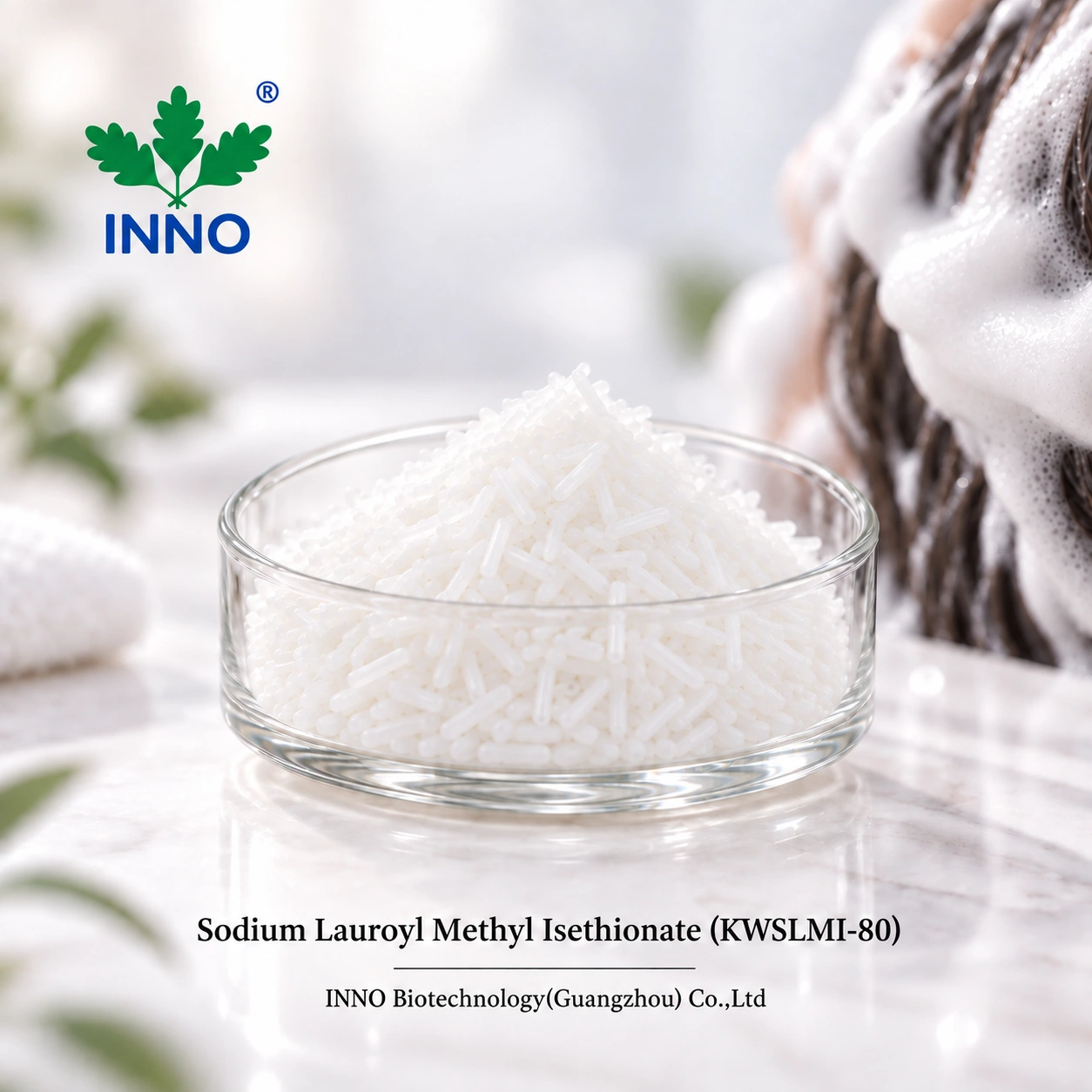
INNO KWSLMI-80 is our Sodium Lauroyl Methyl Isethionate (SLMI) grade for rinse-off hair and skin cleansers. SLMI is a mild anionic surfactant used when a formula needs dense foam, good rinseability and a clear or opaque liquid format. KWSLMI-80 can be evaluated as the main anionic surfactant or as part of a blend with amphoteric and nonionic co-surfactants.
Key benefits of KWSLMI-80
- A practical route to clear liquid cleansers. SLMI has better water solubility than conventional solid isethionates such as SCI. This makes KWSLMI-80 relevant when transparent shampoo, facial cleanser or body wash is part of the development brief.
- Dense foam with a clean rinse. SLMI is chosen for a compact, creamy lather and a comfortable after-wash feel. The final foam profile should be assessed at the water hardness, oil load and surfactant concentration planned for the finished product.
- Flexible use in mixed surfactant systems. KWSLMI-80 can be screened with betaines, taurates, glucosides and other compatible co-surfactants. The blend can then be adjusted for foam, viscosity, clarity and rinse feel rather than relying on one surfactant to deliver every property.
- Suitable for primary or secondary surfactant use. This gives formulators room to build an SLMI-led base or use it to modify the performance of an existing cleansing system.
- Clear purchasing criteria. An SLMI grade should be qualified by active matter, physical form, pH test method, moisture, free fatty acid, color and batch-release documentation.
Recommended applications
- Shampoo and scalp cleansers: use KWSLMI-80 in clear or opaque systems where foam, rinseability and compatibility with conditioning polymers must be balanced. Complete the viscosity adjustment after adding the fragrance, preservation system and conditioning ingredients.
- Facial cleansers: evaluate it in transparent gels, cream cleansers and foaming washes. The final surfactant blend and pH should be set against the required cleansing level and after-wash feel.
- Body wash and hand wash: use the finished fragrance load, water quality and target viscosity during screening. These variables can change clarity and salt response even when the surfactant ratio remains unchanged.
- Concentrated cleansing bases: compare candidate systems on delivered active matter, dilution process and finished-product performance. This gives purchasing and production teams a more useful basis than price per kilogram alone.
Formulating with KWSLMI-80
| Active matter | Calculate the KWSLMI-80 level from the current product specification. Compare alternative surfactants at equal total active matter. |
|---|---|
| Clarity | Check the complete formula after fragrance, preservative, electrolyte and polymer have been added. A clear surfactant premix does not guarantee a clear finished product. |
| Viscosity | Build the salt or thickener curve only after the surfactant blend and minor ingredients are fixed. Record viscosity at a consistent temperature and deaeration state. |
| Foam evaluation | Use the water hardness, oil load and surfactant concentration that reflect the intended product. Compare initial foam and foam retention under the same conditions. |
| Scale-up | Fix the addition order, batch temperature, mixing intensity, feed rate and deaeration time before moving from the lab to the production vessel. |
KWSLMI-80 or SCI?
SLMI and Sodium Cocoyl Isethionate (SCI) should not be treated as one-to-one replacements. An SLMI route is usually considered when water solubility and clear liquid processing matter, while SCI is widely used in opaque and solid cleansing formats. Compare the two at equal total surfactant active matter, then repeat the clarity, viscosity, foam and stability checks in the complete formula.
Frequently asked questions
How should buyers compare quotations for different SLMI grades?
Start with cost per kilogram of delivered active matter, then account for physical form, packaging, freight, storage and processing requirements. Two grades with the same INCI name can differ in active content, moisture, free fatty acid, pH method and handling behavior. A purchase decision based only on the quoted kilogram price can hide those differences.
Which KWSLMI-80 values should be written into a purchase specification?
The purchase specification should identify the grade and agreed test methods, then state the approved limits for active matter, physical form, pH, moisture, free fatty acid, color and any other release fields required by your quality system. Packaging, document requirements and change-control expectations should also be agreed before the first commercial order.
Why can a clear SLMI cleanser turn hazy after fragrance or preservative is added?
Clarity belongs to the full formula, not the surfactant alone. Fragrance, electrolyte, preservative, polymer, water hardness and pH can change solubility or micelle structure. Add these variables separately during development and record when haze first appears. Rebuild the salt curve after the final composition is fixed.
What changes when an SLMI formula moves from the lab to a production vessel?
A larger vessel changes mixing, heating, feed rate and air entrainment. Keep the addition order and hydration endpoint consistent, then measure viscosity only after the batch reaches the agreed temperature and air level. This makes it easier to separate a process difference from a raw-material or formula difference.
Request KWSLMI-80 for evaluation
INNO developed KWSLMI-80 as an SLMI grade within our cleansing-surfactant portfolio. Request the current specification and a sample, and confirm the required packaging, MOQ, technical documents and lead time for your destination. Include your application, target pH, clarity requirement, expected quantity and destination so we can discuss a suitable evaluation basis.