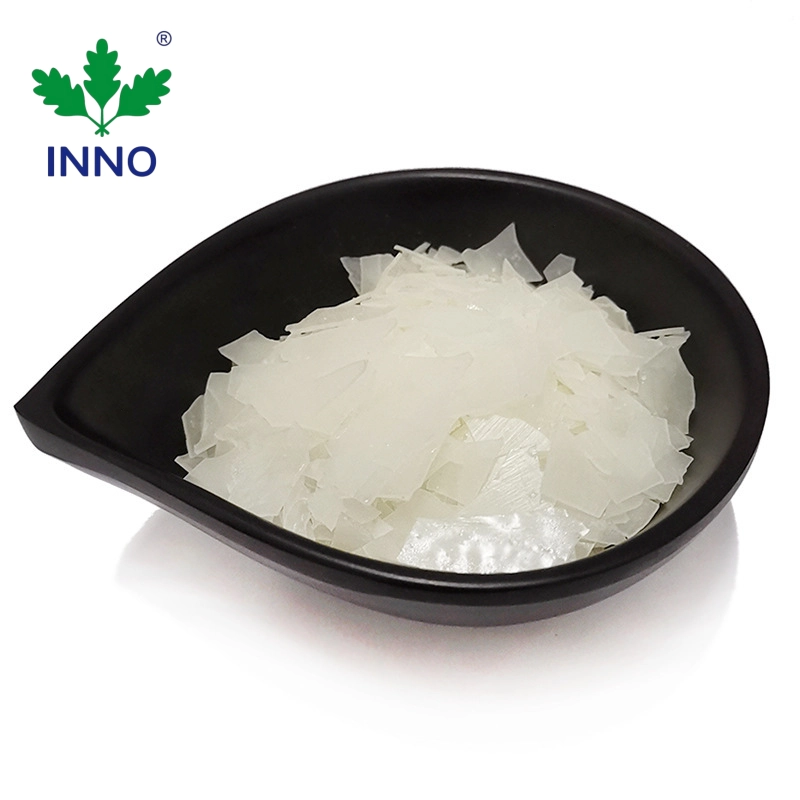
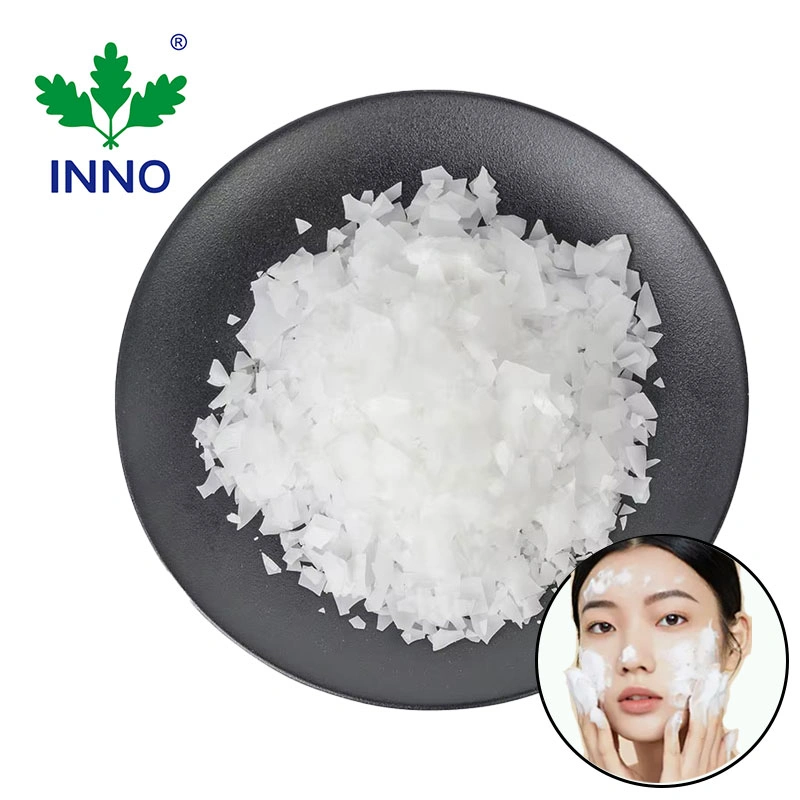
We supply Cetearyl Alcohol and Cetearyl Glucoside emulsifier as INNO KWM68A, a cosmetic-grade cetearyl alcohol/cetearyl glucoside emulsifier blend for O/W emulsions and texture control.
Key Benefits of Cetearyl Alcohol and Cetearyl Glucoside Emulsifier (KWM68A)
- KWM68A is a cetearyl alcohol and cetearyl glucoside system that forms a lamellar liquid-crystal structure in oil-in-water emulsions. This structure supports uniform oil and water phases and improves emulsion stability.
- The liquid-crystal network improves moisture retention while giving creams and lotions a rich but non-greasy finish. The product spreads smoothly without a heavy wax feel, visible whitening or a closed, occlusive finish.
- The plant-derived emulsifier base is designed for sensitive-skin and baby-care concepts. It also gives face cream, body lotion and hand cream a refined texture with a fine, even appearance.
- Processing is straightforward: add KWM68A to the oil phase at 70 to 80 degrees C using normal hot-process equipment. The grade provides controlled thickening without excessive stringiness or pilling.
- KWM68A also supports hair conditioning. It can add body and a smoother finish to conditioner and hair-mask systems while maintaining the same practical hot-process route.
Recommended applications
- Use KWM68A in face cream, body lotion and hand cream to create a lamellar structure with strong moisture retention and a smooth, non-greasy finish.
- It suits eye cream, lip care and facial masks that require a fine texture without waxy drag, whitening or pilling during application.
- In conditioner and hair masks, the emulsifier adds body and supports a smoother, more conditioned finish on the hair.
- Choose it for standard hot-process emulsions when the production line can add the material to the oil phase at 70 to 80 degrees C.
Formulation and commercial details
| Grade | Cosmetic Grade |
|---|---|
| Packaging | 20 kg kraft paper bag |
| Gross weight | 20.2 kg |
| Packing dimensions | L80xW40xH10cm |
| How to use | Add KWM68A to the oil phase at 70-80 C in a conventional hot-process O/W emulsion. Set the heating, homogenization and cooling profile to the complete formula and production equipment. |
| Compatibility | Use it in the complete surfactant or emulsion system and set the final viscosity, clarity and stability after all ingredients are present. |
Choosing between related INNO products
KWM68A is a Cetearyl Alcohol and Cetearyl Glucoside emulsifier blend. KCPP-1 is a phosphate emulsifier with a different emulsion structure and process.
Frequently asked questions
Can KWM68A be dropped into a Glyceryl Stearate and PEG-100 Stearate base without reformulation?
No. Rebuild the oil-to-emulsifier balance and processing route around KWM68A, then compare the new emulsion at equal oil load. Copying the old percentage can hide an unstable network behind fresh-batch viscosity.
A fresh KWM68A emulsion passes a visual check but fails heat or centrifuge testing. Where is the likely gap?
The fresh viscosity can hide an unbalanced oil load, incomplete emulsification or a weak supporting water-phase structure. Recheck phase temperatures, homogenization energy, electrolyte load and cooling profile before adding more wax or gum.
How can a formulator reduce whitening, pilling or a waxy drag in a KWM68A emulsion?
Keep the oil phase, emulsifier level and homogenization conditions in balance, then cool the batch under consistent sweep mixing. Evaluate rub-in after the structure has fully developed instead of judging the emulsion immediately after manufacture.
Why can a KWM68A emulsion thin after a water-soluble active is added?
The active may introduce electrolyte, solvent or additional water that changes the lamellar network. Add it to split batches through the intended phase and compare viscosity and stability before compensating with more emulsifier or wax.
How should the commercial cost of KWM68A be compared with another emulsifier system?
Compare the total emulsifier and structurant package needed to pass stability, not the primary emulsifier price alone. Include processing time, homogenization demand, batch yield and the cost of texture corrections during scale-up.
Why work with INNO?
INNO supports emulsion process design, texture adjustment and pilot-scale troubleshooting for KWM68A. Buyers can request samples and current quality documents before scale-up.