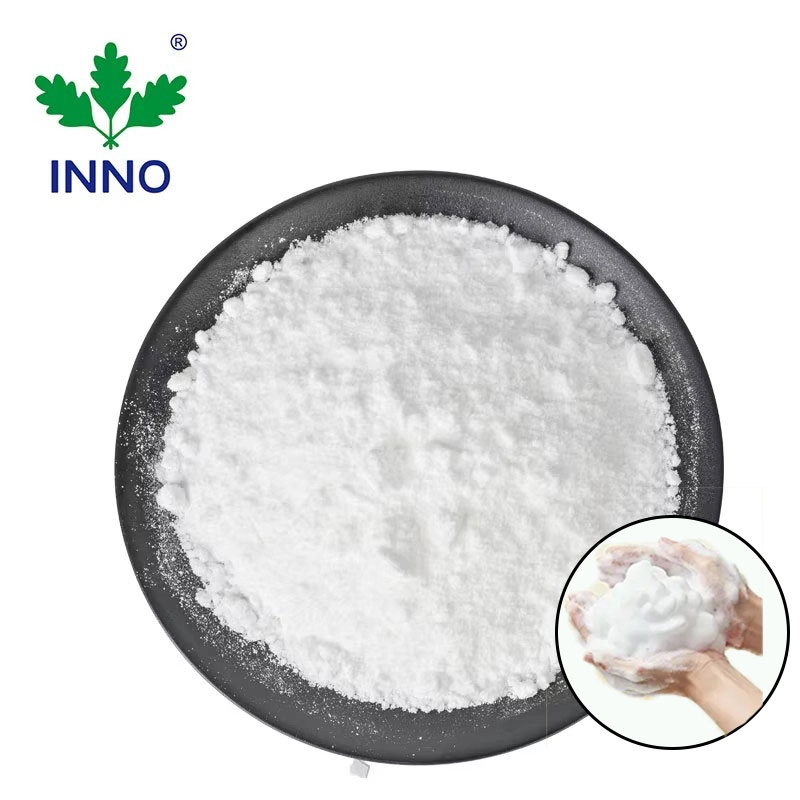
We supply Sodium Cocoyl Glycinate powder as INNO KWGC-95, a cosmetic-grade high-active sodium glycinate surfactant for dense foam and high-solids cleansing bases.
Key Benefits of Sodium Cocoyl Glycinate Powder (KWGC-95)
- KWGC-95 is a high-active sodium cocoyl glycinate powder with a mild cleansing profile. It is designed for daily-use products and formulas aimed at sensitive or easily reddened skin.
- It creates dense, creamy foam with strong stability in hard water. The lather keeps its body in mineral-rich water instead of collapsing during use, which supports a consistent consumer experience across markets.
- The sodium salt thickens efficiently. Formulators can build high-viscosity amino-acid cleansing pastes with less dependence on separate thickeners, which simplifies the structure of the finished formula.
- KWGC-95 is compatible with amphoteric, nonionic and other amino-acid surfactants. It remains effective across mildly acidic conditions and selected alkaline or soap-based blends.
- The combination of efficient thickening, broad formulation tolerance and high active matter gives this grade a strong cost-performance position for commercial facial cleanser and wash-paste projects.
| Salt content, Wt% | ≤1.5 |
| Loss On Drying | ≤5% |
| Heavy Metals (PPM) | ≤20 |
| Arsenic Content (PPM) | ≤2 |
Recommended applications
- KWGC-95 is well suited to high-viscosity amino-acid facial-cleansing pastes because the sodium salt helps build structure with less separate thickener.
- Use it in creamy facial foams for sensitive-skin concepts when the product must keep a dense lather in hard water.
- It can be blended into shampoo, body wash and hand wash to add mildness, foam density and a more conditioned rinse.
- The broad pH tolerance also supports selected soap and amino-acid hybrid systems that need better foam, lower harshness and controlled cost.
Formulation and commercial details
| Grade | Cosmetic Grade |
|---|---|
| Packaging | 15 kg cardboard drum |
| Gross weight | 17.9 kg |
| Packing dimensions | Ø40xH50cm |
| Storage | Store sealed in a dark, cool, dry place (current TDS). |
| How to use | Disperse the powder under controlled agitation and allow full hydration or dissolution before setting pH and viscosity. Complete the salt curve after adding all surfactants, fragrance and the preservation system. |
| Compatibility | Compatible with the co-surfactants described above. Set the final electrolyte, polymer, fragrance and preservation system in the complete formula. |
Choosing between related INNO products
KWGC-95 suits concentrated and high-solids cleansing bases. KWGC-30 is the liquid option for direct aqueous-phase addition.
Frequently asked questions
A KWGC-95 cleanser is not thickening as expected. Where should troubleshooting start?
Split one master surfactant base and add electrolyte in controlled increments before introducing a polymer. Add fragrance and preservative to the best two conditions only; this shows exactly which step caused the viscosity loss.
When should a formulator select KWGC-95 over Potassium Cocoyl Glycinate?
Select KWGC-95 when dense foam and efficient thickening are central to the brief, especially in a high-viscosity facial-cleansing paste. Select the potassium salt when solubility and a quicker, fresher lather are more important.
How should KWGC-95 self-thickening be benchmarked against an incumbent grade?
Prepare both bases at equal surfactant solids and split each one across the same electrolyte increments. Record viscosity at fixed intervals through 72 hours, then compare the usable plateau and not a single fresh-batch reading.
When is a separate polymer still useful in a KWGC-95 cleansing paste?
Use a polymer only after the electrolyte curve has been completed. It can be justified when the formula needs more yield value, suspension or temperature stability than the surfactant structure can provide on its own.
How should procurement compare KWGC-95 with a lower-priced glycinate grade?
Compare both grades in the same finished base at equal active matter. Include the thickener package, processing time, rework risk, stabilized viscosity and pack performance so the decision reflects total formula cost rather than raw-material price alone.
Why work with INNO?
INNO can help buyers benchmark thickening, hard-water foam and formula cost against an existing sodium glycinate grade. Commercial supply is supported by batch and technical documents.